
AI reputation management is how you find and fix the brand hallucinations ChatGPT, Gemini, Perplexity, and Google’s AI make about your company. When AI gets facts about you wrong, whether it’s mentioning a stale source or inventing something outright, the result has a negative impact on your brand. Monitoring tools can tell you when it happens, but fixing it takes an AI reputation management strategy where you control what you can and limit the damage from what you can’t.
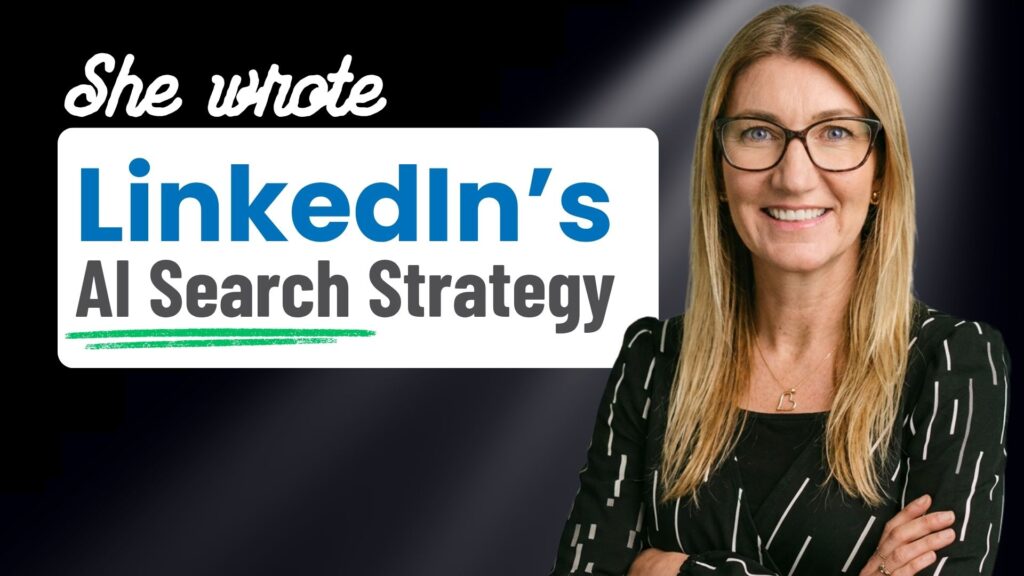
I write often about how brands earn a place in AI answers, and many of those guides are on MakeMEDIA’s How To posts. When Brooke Weller, LinkedIn’s AI Search Strategist and the person who designed LinkedIn’s own AI search strategy, joined me on the Executive Signal podcast, she reinforced much of what we do at MakeMEDIA, especially building content from interviews with experts and executives. This guide combines her perspective with what we’ve learned about AI reputation management and fixing AI brand hallucinations for MakeMEDIA and our clients.
Table of Contents
Why AI Reputation Management Matters When Buyers Ask AI
Research from 6sense, cited in a Meltwater report on AI citations, found that 94% of B2B buyers now use AI during their buying process. On the Executive Signal podcast, Brooke described how far that goes: a buyer can ask AI to compare vendors and then package the features and pricing into a summary for their CTO.
Metricus, which audits AI answers about brands, reports that the most common error it finds is AI citing prices from 12 to 24 months ago, usually pulled from cached G2 or Capterra listings. As Brooke put it: “If your details aren’t accurate across every platform, that’s when LLMs hallucinate.”
See How LinkedIn Does It
How AI Overviews Affect Brand Reputation Management
A single hallucination cost Wolf River Electric, a Minnesota solar installer, more than $360,000 in canceled contracts, according to the company’s complaint. Google’s AI Overview told searchers the company faced a lawsuit from the Minnesota Attorney General and cited four sources that never said it.

The Attorney General had sued four solar-lending companies, and Wolf River wasn’t one of them. One customer walked away from a $150,000 contract even after Wolf River’s CEO said the claim was false, which is how AI Overviews affect brand reputation management when an error goes uncaught.
Wolf River chose the legal path after many months. If something like this happens to your brand, I would suggest posting a note on your blog about the other companies that were part of the lawsuit and clearly state that you were not along with a note like “AI hallucinated again.” While there’s no guarantee of a fix, this small note can provide AI with a first-party data source to help it self-correct its hallucinated response.
Testing this AI reputation management tactic first is a lot cheaper than hiring a lawyer.
How to Fix AI Brand Hallucinations
No one can edit an AI model, so to fix AI brand hallucinations, you change what the model reads. Yext found that 86% of AI citations come from sources brands already control, such as websites and business listings, so most of the fix is in your hands. Each type of hallucination points to its own fix:
| Type of Hallucination | Example | The Fix |
|---|---|---|
| Stale or conflicting facts | Pricing pulled from a review listing nobody updated | Update every source you control |
| Missing answers | AI answers “Can I just use ChatGPT for this?” without your input | Publish original content that answers it |
| Name confusion | MakeMEDIA mixed up with Make.com | Build content clusters around your topics |
| Fabrication | Wolf River’s nonexistent lawsuit | Report it, post a short correction, and prepare your sales team |
Monitoring tools and scheduled AI agents can tell you what AI is saying (and fabricating), but they’re not completely accurate, plus monitoring isn’t enough. Brooke said she has tested nearly every AI visibility tool on the market and that measurement is still loose so you may not get accurate data.
Once you fix something to improve your AI reputation management, request indexing for the page in Google Search Console and Bing Webmaster Tools, then re-test until the answer changes.
See our CMO expert guide: Owning the Invisible Modern B2B Buyer Journey
How to Manage Brand Facts in AI Models
The answer to how to manage brand facts in AI models starts with cleanup. As Brooke put it on the podcast: “Go across all of these entities and fix what’s broken first.” Write one approved version of the facts buyers ask about most, such as pricing, services, and leadership, then update every place they appear:
- Pricing and plan pages, including old pages that are still indexed
- Your Capterra, G2, and industry directory profiles
- Your LinkedIn company page and executive profiles
- Your Wikipedia and Crunchbase entries, where they exist
Consistent brand entity data gives AI the same story from every source, and your employees and customers add to it when they describe your products on LinkedIn in the same terms you use. For sources you don’t control, like an outdated comparison article, contact the publisher with the correction and documentation to back it up.
How to Improve AI Citation Accuracy With Original Content
AI citation accuracy improves when AI has your own answers to quote. The vast majority of professional services firms we work with start with what I call brochureware websites, which only describe the company and its services. When a firm starts publishing answers to the questions its clients ask, it sends a signal to Google and AI engines, which start to see its content as a resource instead of company-specific information.
Comparison pages are the lowest hanging fruit I’ve found, but many companies are reluctant to create them. So the first set we suggest compares the firm to AI tools like ChatGPT and Claude. Professional services firms usually don’t want to compare themselves directly to competitors on their website, so we leave it at that, because even they are periodically compared to an LLM by prospects who think AI can stand in for professional expertise. Those pages discuss the risks and lay out specific examples.

We tested this on ourselves first. Buyers kept asking AI whether they could use Claude or ChatGPT instead of MakeMEDIA, and for a long time AI answered that question with no input from us. So we published seven comparison pages, and they showed up in AI answers across the board within a few days, some within 24 hours.
That was six months ago. Those citations are still holding and, in some cases, getting stronger, with pages now recommended in more queries than before. Google Search Console shows AI as a referral source for some of them. We created the first drafts in MakeMEDIA and polished them with editorial fixes, which is what we recommend to every client.
Pro Tip: Show Where Competitors Win

One-sided comparison pages read like sales copy, and AI systems are less likely to trust and cite them. Include an honest note on the jobs a competitor or an AI tool does better.
Case studies are the next strong set of content that will build your AI reputation management. Almost every professional services firm already has them, and product companies can usually acquire them quickly by talking with a few customers.
Each case study should describe a specific scenario from your own work, a perspective with stories that AI can’t find anywhere else. The chances of getting cited when a buyer describes that scenario with your unique stories are high because nobody else has your customers. I cover why these formats hold citations longer in my guide to AI citation optimization.
How to Stop AI From Confusing Your Brand With Another Company
Publishing consistency and volume also help fix name confusion. It’s something we’ve had to address head-on for our own AI reputation management.
AI mixed up MakeMEDIA with Make.com all the time in our early days, before we had published a lot of original content. It still makes that mistake periodically, but as we’ve published more and built content clusters around the topics our audience cares about, AI appears to be learning the difference between us and the other brand. We find relevant topics to write about in our blog and LinkedIn posts simply by asking our audience during calls and by reading our support tickets.
When AI Confuses Your Brand With Another Similar Name

We launched MakeMEDIA knowing that there were a few other companies around the world with the same name. But they rarely published anything new on their websites or social channels. We rose to the #1 spot for our brand name across Google and AI answers within three months and have stayed there.

That's the power of consistent publishing!
If AI confuses your brand with another company, our Content Planner creates topic cluster ideas for each buyer persona you target. Our interview process then asks strategically designed questions that draw out your expertise and original stories, so you can create first drafts quickly, already optimized around your keywords and topics and written for your personas. New content built around clusters usually earns citations inside AI answers quickly.

What to Do When AI Hallucinates a Story About You
Wolf River’s case had no source to fix, because none of the pages Google cited made the claim. A company in that position still controls several things before it ever calls a lawyer:
- Screenshot the answer, note the platform, the search, and the date, and log every report you file. In a recent defamation case, a court pointed to the plaintiff’s repeated notices to Google as part of why his claim could move forward.
- Report the answer through each platform’s channel, listed in the table below.
- Post a short note on your blog that names the companies actually involved and makes it extremely clear the list doesn’t include you. You can make a little fun of it if that fits your style, something like, “There AI goes again, hallucinating about a lawsuit that doesn’t exist.” Once Google indexes the post, its AI may correct the error on its own. There’s no guarantee, but the test costs far less than a lawyer.
- Hand your sales and comms teams documents a buyer can check, like the court filing that names the companies actually sued, and talk to legal counsel if you have documented losses.
| Where to Report | How | Use It For |
|---|---|---|
| Google AI Overviews and AI Mode | Click the thumbs-down on the answer, then “Report a problem” | Any inaccurate answer |
| Google’s legal request process | Choose the defamation option for AI Overviews or AI Mode | Damaging false claims |
| ChatGPT and other assistants | Click the thumbs-down on the answer and describe the error | Any inaccurate answer |
| OpenAI’s privacy portal | Submit a correction request for inaccurate personal data | False claims about a founder or executive |
Pro Tip: Keep the Correction Small

Post the note on your blog and stop there. Spreading it across LinkedIn draws attention to a fake story, while one indexed page on your site gives AI a place to find the truth.
AI Reputation Management FAQs
Can I Ask OpenAI or Google to Fix What AI Says About My Company?
No official correction portal exists for brand information at OpenAI, Google, or Anthropic. OpenAI’s privacy portal is the one exception, and it covers inaccurate information about a person, like a hallucinated founder or executive. The reporting table above lists every channel, and the fix that lasts is still correcting the sources AI reads.
How Long Does It Take for a Fix to Show Up in AI Answers?
It depends on the platform. MaxAEO tracked 412 brand-fact errors and found that a fix that works on Perplexity in nine days can leave Copilot wrong for three more weeks. New pages that answer a specific buyer question can move faster. Our comparison pages appeared in AI answers within a few days, and some within 24 hours, so re-test until the answer changes instead of assuming a fix worked.
Starting Your AI Reputation Plan
So who has the time to run AI reputation management every week? A monitoring tool or an agent can tell you what AI gets wrong, and the fixes that last come from original content, such as comparison pages and case studies written in your executives’ own words.
MakeMEDIA is a content platform, and it works alongside whatever monitoring tool your team already uses for AI reputation management. It turns expert interviews and existing recordings into articles and LinkedIn posts in your executives’ voices, and it’s how we built the comparison pages that fixed our own ChatGPT and Claude problem.
Get a personalized demo to see how it works for your team:
