

Many executives are turning LinkedIn into a revenue machine. But LinkedIn best practices for executives are different than how others approach social media. In this guide, and accompanying podcast, LinkedIn strategist Harris Fanaroff, CEO of Linked Revenue shares the exact playbook he’s used to generate $4 million in revenue for his clients.
At first, LinkedIn feels overwhelming because executives think it requires a massive time investment. The reality is much simpler. LinkedIn works best when you treat it as what it actually is: the only B2B social channel where you can stay top of mind with your network while identifying new opportunities.
Table of Contents
LinkedIn success stems from building relationships that drive revenue, not simply becoming a content creator. Watch the full podcast:
LinkedIn Best Practices Start With Simple Monthly Actions
When executives tell Fanaroff they don’t know where to start with LinkedIn, he always gives this advice:
- Start by posting once per month for six months.
- Share something that’s happening in your business, your industry, or your network.
- Add your own thoughts about it.
This simple LinkedIn best practice works for executives because it’s easy to manage and lays the groundwork for building pipeline from LinkedIn. If you’re an executive with a good background, your audience already exists. They’re your former coworkers, clients, and industry contacts. When you start showing up regularly, even once a month, someone will think of you who wouldn’t have before.
The content doesn’t need to be perfect. Frankly, trying to make it perfect kills your progress faster than anything else. You can share ideas from client conversations, interesting podcasts you heard, or books you’re reading. The key is adding your own thoughts instead of just repeating what already exists.
You'll also enjoy our top-ranked guides:

• Authentic Yet AI-Powered LinkedIn Content Creation

• LinkedIn Content Strategy for CEOs
What to Share as an Executive
If you’re not sure what to post, you’re experiencing the most common challenges every executive faces. In mid-2025, PayPal posted a job opening for Head of CEO Content. Salary: up to $236,500 per year. This is for someone to manage just their CEO’s social presence. This salary is higher than what some CMOs make!
When major corporations allocate quarter-million-dollar budgets to a single executive’s social presence, they’re making serious bets on executive content. The reason: ROI is proving to be substantial.
Coming up with content in the CEO’s voice that aligns with what their audience needs to hear can be time consuming. I’ve developed a straight forward framework to help you think about ideas very quickly, without needing to hire such an expensive specialist.
One of the best tactics for content ideation is to ask yourself what your clients get excited about when they talk to you. Focus on topics that show your skills while adding real value:
- Client insights: What gets your clients excited when they talk to you? What questions do they ask over and over?
- Industry observations: Your own thoughts on podcasts, books, or industry trends you’re following
- Business challenges: Problems that keep coming up in your conversations with other executives
- Learning moments: Lessons from deals, partnerships, or big decisions you’ve made
These topics make great LinkedIn posts because they solve real problems your ideal customers have while showing your experience.
“Success isn’t getting thousands of views because views don’t make money,” explains Fanaroff. “Success is will one member of your ideal customer read this and will it start a conversation.”
The goal isn't to go viral. It's to start conversations with the right people.
You want to plant business seeds the same way you do through phone calls, emails, and in-person meetings. LinkedIn just gives you another way to build relationships and start conversations with people who might become clients.
Personal Messages Beat Automated Outreach Every Time
LinkedIn best practices for executives need a different approach than what most sales teams use. You’re not trying to reach thousands of people. You’re focusing on valuable relationships that can make a lot of money per deal.
When someone likes or comments on your content, that’s your signal to reach out. But the message needs to sound human, not like a mass message sent to hundreds of people. Fanaroff’s executive clients get response rates of 40% or higher on their outreach because they take time to make each message personal.
Here’s how it works. After you post content, look at who liked or commented. Use a tool like Sales Navigator to filter these people by your ideal customer type. Then look at each person and ask yourself: Do I know this person? Have we worked together before? What’s our connection?
For people you know, the outreach is simple. Send a message to reconnect like this:
SAMPLE WARM OUTREACH MESSAGE

"Thanks for engaging with my content. Would love to hear what's happening at your company and share more about what we're doing. It's been a while since we connected when we worked together on that project."
For connections you don’t know well, you can still add value. Invite them to an executive dinner or industry event you’re hosting. Share a resource that helps with their business problems. The key is making the first interaction about them, not about selling your services.
The Power of Video Direct Messages
Video messages work really well for this type of outreach. According to Fanaroff, less than 1% of executives get personal video messages, so you stand out right away. A simple 10-second video saying thank you for engaging or sharing a quick thought gets response rates of 3-5% and watch rates of 10-15%. These numbers might seem low, but they’re great metrics for business development.
| Outreach Method | Typical Response Rate | Key Advantage |
| Personalized text message | 40% | High conversion, relationship-based |
| Video direct message | 3-5% reply, 10-15% watch | Stands out, less than 1% of executives receive these |
| Generic connection request | <1% | Easy to scale but ineffective for executives |
Personal Content Creates Unexpected Business Results
LinkedIn best practices for executives include mixing business insights with personal stories. About 20% of your content should show the human side of who you are. This doesn’t mean oversharing or turning LinkedIn into Facebook. Personal content creates different ways for people to connect with you. Look at what happened to one of Fanaroff’s clients:
Super Bowl Picture Turns Into $500,000+

One client, a big Philadelphia Eagles fan, posted a picture of himself watching the Super Bowl in his Eagles jersey with his kid. A top prospect who was part of his network saw his post and messaged him about being a fellow fan. This led to a conversation about business problems.
That relationship turned into a $500,000+ deal. The personal connection opened a door that cold outreach never could have.
He shared another client example where an executive posted a photo from his wedding. A prospect who hadn’t talked to him for two years reached out after seeing the post. That conversation led to a $275,000 deal. As humans, we connect with human stories more than we connect with business messages.
Making Your LinkedIn Profile More Personal
Your LinkedIn profile should also include personal details. Add a few interesting facts about yourself in the About section. Maybe you played college sports, have an unusual hobby, or speak multiple languages. These details become conversation starters before sales calls even begin.
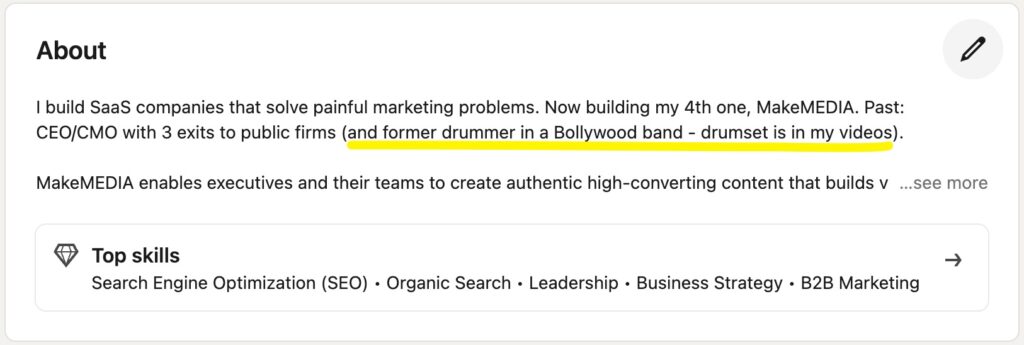
I experienced this myself when I included information about being a drummer in a Bollywood band. It sounds unusual for someone living in the DC area, but that’s exactly why it works. People remember it, ask questions about it, and use it as a reason to start conversations. The uniqueness makes you more memorable than generic business credentials alone.
The same rule applies to content creation. Share stories that only you could tell. If AI could write your post, don’t publish it. Your unique experiences, specific client examples, and personal insights are what make your content valuable.
“In a world where AI is taking over more and more, the more we can be human and connect with one another, the better,” notes Fanaroff.
Think about what makes you different from other executives in your industry. Maybe you have an unusual career path, learned hard lessons from business failures, or have insights from working across different sectors. These experiences become the foundation for content that connects with your audience.
Building Engagement Through Smart Network Interaction
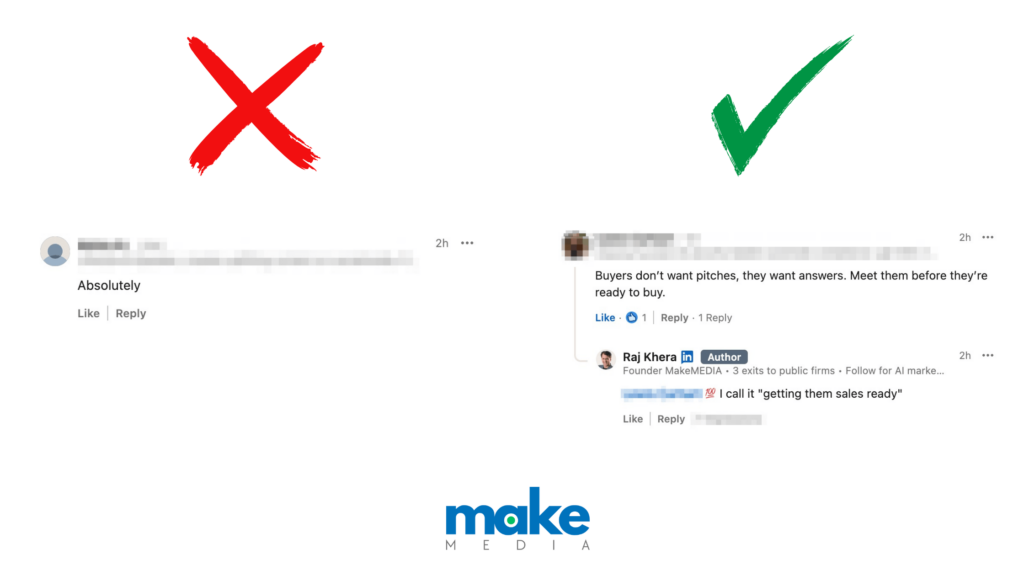
Smart executives don’t just post content and hope for the best. They actively engage with their network’s content in ways that build relationships. This means going beyond generic comments like “great point” or “thanks for sharing.”
One of the most effective LinkedIn best practices for executives involves using the notification bell on LinkedIn profiles. When you identify someone as a potential prospect, turn on notifications for their posts. Every time they share content, you’ll get an alert. This gives you chances to leave thoughtful comments that show your expertise and keep you visible.
Smart Commenting Techniques
The key is making comments that only you could make. Good commenting strategies include:
- Share specific experience: Talk about how you’ve dealt with similar problems in your industry
- Provide valuable resources: Mention relevant articles, tools, or connections that could help
- Ask thoughtful questions: Dig deeper into their post with questions that show real interest
- Offer different perspectives: Respectfully disagree or add details based on your experience
These types of responses show you’re really engaged instead of just going through automated actions. After several meaningful interactions, your eventual outreach feels natural instead of random.
This technique is one of the most underutilized LinkedIn best practices for executives.
It works because it changes how your eventual sales conversation feels. Instead of being a cold contact, you become someone who has been providing value and showing interest in their business. When you do reach out to schedule a call, they already know what you’re about and see you as someone worth talking to.
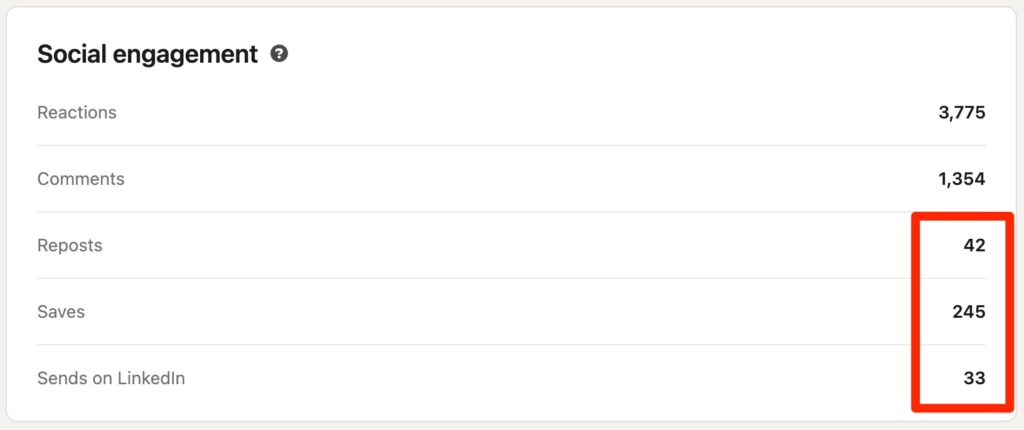
Fanaroff experienced this firsthand at a recent charity golf tournament. A CFO of a public company told him she reads everything he writes on LinkedIn but has never liked or commented on a single post in five years. This happens more often than you might think. Your content reaches people who engage silently, and you won’t always see the impact through likes and comments alone.
Focus on Money-Making Metrics Over Vanity Numbers
LinkedIn best practices for executives require focusing on metrics that actually drive business results. Many people get caught up in vanity metrics like total likes or comments without understanding what really shows success.
The most important metric is how many people in your ideal customer profile want to schedule meetings with you.
This includes both inbound requests from people who found you through your content and outbound conversations that started from your engagement efforts.
Profile views and content impressions matter more than likes and comments because they show reach. Someone might read your entire post, think it’s valuable, but not engage publicly. They might even visit your profile to learn more about your background. These actions show interest even without visible engagement.
Network Size and Deal Value Considerations
Response rates on your outreach efforts tell you whether your relationship-building approach is working. Fanaroff notes that a 40% response rate is excellent for any type of business development outreach. Even a 10% response rate can create significant results if you’re targeting the right people with high-value opportunities.
The size of your network affects how quickly you see results, but it’s not the only factor that matters. If your average deal size is $50,000 or more, you don’t need thousands of connections to make LinkedIn profitable. One conversation with the right person can justify months of relationship-building efforts.
For executives with networks of 3,000-5,000 connections who have built successful businesses, results can happen quickly. Fanaroff recently worked with a private equity executive launching a new company who scheduled 30 meetings with ideal prospects in his first month. His impressive background and large network of relevant contacts made this possible.
“People do business with people they like, and deals getting done at a human level will always be the case,” Fanaroff explains.
My experience has been very similar and it’s why I include this tactic as one of the LinkedIn best practices for executives. When you have a smaller network, even under 1,000 connections, posting consistently on topics you have (or are building) authority on starts to attract others who follow you, which increases your network.
Smart Network Mining for Hidden Opportunities

There’s a technique that many companies don’t have time for: systematically looking through your existing connections for untapped opportunities. Most executives have hundreds of first-degree connections they haven’t talked to in years. Some of these people now work at companies that could benefit from your services. Others might know people who would be good prospects for you.
Sales Navigator helps you filter your connections by company size, job title, location, and other criteria that match your target market. This makes it easier to identify outreach opportunities without manually reviewing every connection.
This LinkedIn best practice starts with pulling your first-degree connections that fit your ideal customer profile. Then you go through them systematically, asking:
- Do I actually know this person?
- When did we last connect?
- What’s the relationship history?
For people you have real relationships with, create personal outreach that mentions your shared history.
Being Proactive with Referrals
Consider being proactive with referrals instead of hoping they happen naturally. When existing clients are happy with your work, research their LinkedIn networks to identify people they know who fit your ideal customer profile. Then provide them with a specific message they can send to make introductions.
Fanaroff recommends taking this approach further by writing referral messages for clients. Instead of asking “Do you know anyone who might need our services,” you can say “I saw you’re connected to these three people on LinkedIn who fit exactly who we want to work with. Here’s a message I’d love for you to send if you’re comfortable with it.”
Time Investment and Realistic Expectations
LinkedIn best practices for executives don’t require huge time investments, but they do need consistency. The executives who get the best results treat LinkedIn as an extension of their existing business development efforts. They use it to stay visible with their network, identify new opportunities, and start conversations that lead to revenue.
A realistic approach involves posting once or twice per month and spending 15-20 minutes after each post reviewing engagement and sending follow-up messages. This manageable schedule prevents burnout while maintaining visibility with your network.
Building Momentum Over Time
The relationship-building approach takes time, but it creates compound returns. Every meaningful connection you make expands your network and creates new opportunities. People who know your work become advocates who think of you when relevant situations arise.
Remember that business development through LinkedIn works best for high-value B2B relationships. If you need to sell thousands of low-priced items, other channels will be more efficient. But if closing one deal can generate $100,000 or more in revenue, the time investment in relationship building pays off quickly.
LinkedIn best practices for executives also include understanding that success looks different than it does for content creators or sales development representatives. Your goal isn’t to go viral or generate thousands of followers. You want to stay top of mind with people who can buy from you or refer business to you.
Start Building Relationships That Drive Revenue
LinkedIn best practices for executives aren’t complicated, but they do require consistency and authenticity. The platform rewards genuine relationship building over automation and mass outreach. Your success depends more on the quality of your connections and conversations than the quantity of your content or followers.
Your network already contains opportunities you haven’t activated. Your expertise already provides value that prospects need. LinkedIn gives you tools to connect the two more effectively than traditional business development methods allow.
The key is starting simple and building momentum over time. Begin with monthly posting, engage meaningfully with your network’s content, and send personal outreach to people who show interest. Focus on metrics that matter for your business, not vanity numbers that don’t drive revenue.
Use MakeMEDIA to Create Authentic Content by Talking
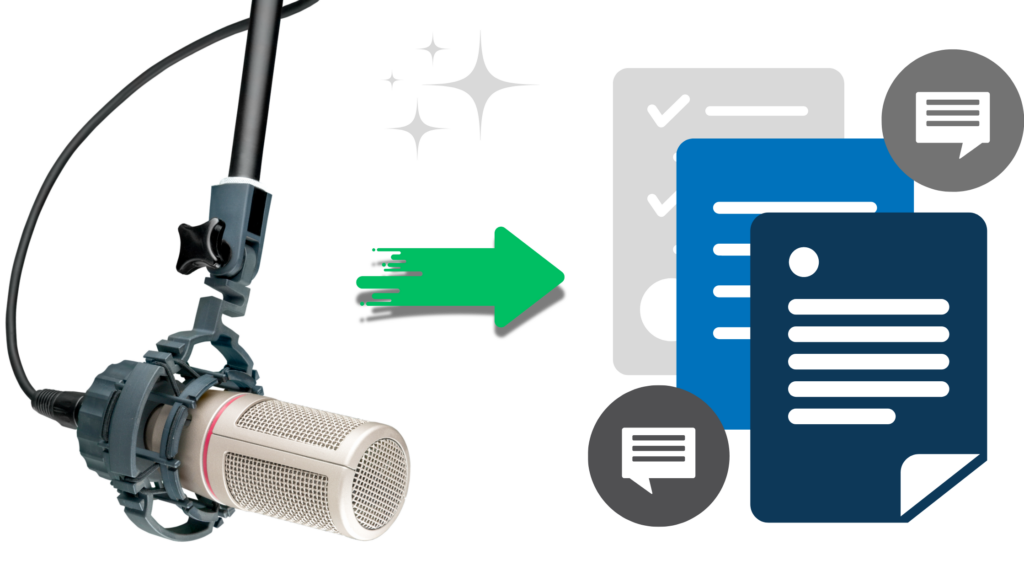
Many executives and their teams use MakeMEDIA because it makes the entire content creation process extremely authentic and very easy to product. It works like this:
MakeMEDIA learns about your background, goals, market insights, and preferred voice, style, and tone.
It then asks you questions about topics you know well and that your audience wants to hear about.
You simply talk to answer the questions and MakeMEDIA creates drafts in your voice for easy editing and posting.
The entire process to create a month’s worth of LinkedIn posts takes just 10 minutes.
