
Most companies are missing a LinkedIn content strategy for CEOs and other B2B C-Suite executives. When I talk to B2B marketing leaders, the same frustration comes up repeatedly: “Our CEO and other executives, who are our best experts, are too busy to help with content creation.” Sound familiar?
LinkedIn Content Strategy for CEOs
Table of Contents
You know your CEOs, technical leaders, marketing and operational executives, and subject matter experts have incredible insights that could drive pipeline and build your brand. But getting them to participate in content interviews or write LinkedIn posts feels near impossible.
After working with over 200 executives in the last 10 months who are facing this exact challenge, I’ve learned that the “too busy” objection usually masks three deeper issues. Understanding these root causes and having a systematic approach to address them can turn your reluctant CEOs, executives, and experts into your most powerful thought leadership content creators.
Before we go too far, take a look at the risk of not being on social media (source: Weber Shandwick survey of 1700 executives):
| How Executives Perceive Their CEOs | CEOs on Social | CEOs Not on Social |
|---|---|---|
| Cares that the company is a good place to work | 60% | 27% |
| Has a clear vision for the company | 66% | 44% |
| Attracts top talent | 53% | 20% |
| Takes responsibility when things go wrong | 54% | 25% |
| Inspires and motivates others | 55% | 27% |
| Honest and ethical | 57% | 33% |
Being silent online might feel safe, but the data shows quite the opposite. Participating in social media is no longer optional for CEOs and their executive leadership teams.
3 Barriers That Stop CEOs from Posting On LinkedIn
There are typically three main reasons why experts don’t contribute to content creation for social media, especially on platforms like LinkedIn.
Barrier 1: They Have Little Time
The first is genuinely about time constraints. These people have deep expertise, but they’re incredibly strapped for time. At most, they might share a quick idea in a voicemail or jot down a couple of lines about a topic in an email. But writing detailed content with hooks, depth, and calls to action? That’s extremely time-consuming for someone already juggling multiple priorities.
Barrier 2: Blank Screen Paralysis
The second barrier is actually knowing what to write. This might surprise you, but it’s common for executives to simply repost other people’s content with minimal commentary.
Barrier 3: Fear of Public Scrutiny
The other common reason that holds executives back is being afraid to post publicly. Sounds ironic. These are leaders who confidently make million-dollar decisions and manage large teams. Yet they hesitate to hit “post” on their own insights.
These constraints are real and valid. The good news? There are proven strategies to overcome each one.
It's not just your posts. It's your profile. Here's how to write one that drives engagement:

Executive LinkedIn Profile Writer for Seasoned B2B Leaders →
The Conversation Mining Framework
The easiest way to help CEOs think about content for LinkedIn is surprisingly simple: ask them about recent conversations. I tell them, “Hey, tell me about a conversation you had in the last few days or week with a team member, vendor, peer, colleague, direct report, or ideally, with a customer.”

This CEO content tactic works because you’re asking about something that already happened and is fresh in their mind.
Then you ask a handful of follow-up questions about that conversation:
What was it about?
What was the main topic?
What could others learn from this dialogue?
You help them identify lessons or insights from that conversation that other people would find useful.
What did their client learn?
What did they learn?
What did they observe?
These become the foundation for authentic content that resonates with their audience.
This approach is extremely unique because nobody else had those exact conversations. The expert owns that experience completely, making it much easier for them to talk about it naturally and authentically. Remember your overarching goal: make your thought leadership content strategy easy for your in-house experts.
Each step in this method builds on the previous one, creating a natural flow from conversation to published content:
Step 1: Pick a Recent Conversation
- Action: Ask “Tell me about a conversation you had in the last few days or week”
- Target: Team member, vendor, peer, colleague, direct report, or customer interaction
- Result: Concrete, memorable discussion to analyze
- Why This Works: Information is already processed and fresh in their mind
Step 2: Get Into Topic Details
- Action: Ask follow-up questions about the conversation
- Key Questions: “What was it about? What was the main topic?”
- Result: Clear content theme identification
- Focus: Understanding the core challenge or insight discussed
Step 3: Think About the Main Lesson
- Action: Help them identify broader insights from the conversation
- Key Questions: “What could others learn from this dialogue? What did your client learn? What did you learn? What did you observe?”
- Result: Content foundation that provides value to wider audience
- Goal: Transform specific interaction into universal business insight
Step 4: Use a Content Structure
- Action: Structure insights into publishable format
- Components: Hook, main insight, supporting details, call to action
- Result: Authentic content that resonates with target audience
- Advantage: Nobody else had those exact conversations – completely unique perspective
LinkedIn Best Practices for Executives: $4M Revenue Playbook
Executives are turning LinkedIn into a revenue generating machine. These detailed LinkedIn best practices for executives give you the blueprint.
Handling Content Compliance and Confidentiality Concerns
If you work in regulated industries like financial services, healthcare, or legal, you must be careful about confidentiality and compliance constraints for your LinkedIn content strategy for CEOs. You cannot disclose confidential information or talk about specific clients by name without permission.
However, you can discuss the concepts in more generic or high-level terms. Instead of saying “I was talking to ABC Company,” you say “I was talking with a client in the financial services industry, and one of the challenges they were trying to overcome was…” This approach maintains privacy while still delivering valuable insights.
For professionals who can't provide specific advice publicly, focus on broader educational content. For example, a tax attorney might say:

"If taking advantage of QSBS was on your radar, there are several changes that occurred due to new legislation. These include increases in tax benefit limits that may save people significant amounts through specific actions taken now."

This demonstrates expertise and creates a natural call to action for people to reach out for personalized guidance.
How to Solve the Expert Content Workflow Bottleneck
Once you convince a busy CEO or executive to try this conversation-based approach, you often hit a new challenge: they start generating ideas faster than someone can turn them into polished content. This creates either burnout on their end or a backlog that kills momentum.
This is where having the right system becomes important. You need a way to capture ideas when inspiration strikes – during a walk, while waiting at an airport, or in those brief moments between meetings.
How to Use AI Safely: AI-Powered LinkedIn Content Strategy
The expert should be able to have a quick five-minute conversation answering strategic questions about topics their audience cares about, and have that automatically turned into polished posts. This is the crux of a workable LinkedIn content strategy for CEOs.
The solution lies in designing workflows that accommodate the unpredictable nature of expert availability while ensuring content quality and timeliness.
Step 1: Identify Content Workflow Bottlenecks
- Problem: Expert generates raw ideas quickly
- Challenge: Content production can’t keep pace
- Risk: Either expert burnout or content backlog that kills momentum
- Impact: Initiative fails despite initial enthusiasm
Step 2: The “Talk, Don’t Write” Content Acquisition Process
- Idea Capture: Enable content creation during downtime (walks, airport waits, between meetings)
- Quick Input: Allow five-minute conversations about relevant topics their audience cares about
- Automated Processing: Transform conversations into polished posts without manual writing
- Team Integration: Automatically notify team members for review and publishing
- Friction Removal: Eliminate barriers between having idea and getting it published
Step 3: Use a Content Technology Solution
- Input Method: Voice-based interview system that asks strategic follow-up questions
- Processing: AI-powered content creation that maintains authentic voice (MakeMEDIA is great at this)
- Team Workflow: Automatic notifications to marketing team for review and posting
- Quality Control: Built-in review process before publication
- Scalability: System works whether expert contributes once per week or multiple times per day
The key is removing the friction between having an idea and getting it published. An AI-powered LinkedIn strategy can make all the difference in retaining authenticity while keeping the content flow going. When experts can contribute their insights without worrying about the time-consuming writing and editing process, they’re much more likely to participate consistently.
See CEO Thought Leadership Examples in action →
Why Great Content Sometimes Gets Ignored
Even when you’ve got authentic, expert-driven content flowing regularly, you might notice flat engagement. People aren’t commenting, sharing, or reaching out despite the quality insights being shared. When content quality isn’t the issue, there are usually two problems to address in your CEO LinkedIn content strategy.

First, you need a very strong hook. This is table stakes now because without a compelling opening, people won’t read even the most valuable post. You also need a strong closing, such as posing a question that sparks ideas and encourages engagement.
But there’s a flip side many people miss: LinkedIn is a place to network and have conversations, which means the best interactions are two-way. You can’t just broadcast content and expect results. Experts should also engage with other people’s posts.
In fact, posting thoughtful comments on content from people with large follower bases can attract attention from prospects you want to reach. It’s a powerful discovery strategy that many overlook.
Speaking to the Right Audience in Each Post

Your LinkedIn content strategy for CEOs isn’t really limited to the CEO. Everyone in the C-suite should be sharing their thoughts, plus your VPs and Directors, too. Being an engineer myself, I can relate to how technical experts often struggle, especially when their natural communication style doesn’t match their audience’s comprehension level. A CTO writing for non-technical decision makers like CEOs or procurement teams faces this challenge regularly.
The solution is knowing who you’re trying to reach and picking one person per post. If you have a product that addresses a specific pain point CMOs face, talk directly to that CMO about their challenges. That same post won’t resonate with a CTO looking for technical details.
In your next post, you can address the CTO’s concerns about security compliance or technical implementation. By segmenting your audience per post rather than trying to speak to everyone at once, each piece of content hits much harder with its intended reader.
| Weekly Posts | Target Audience | Content Focus | Example Topic |
| Post 1 | CMOs | Marketing pain points | “How our content strategy increased qualified leads by 40%” |
| Post 2 | CTOs | Technical implementation | “Security compliance requirements for AI content platforms” |
| Post 3 | COOs | Productivity and operational boosts | “How companies are doing more with less without sacrificing quality” |
| Post 4 | CFOs | ROI and business case | “Calculating true cost savings from automated content creation” |
This approach also naturally creates more thought leadership content volume when you multiply topics by different audience perspectives within your buying committee.
Avoiding the “I’ve Said Everything” Plateau
A few months into consistent posting, many CEOs and other executives worry they’re repeating themselves or running out of fresh perspectives. It’s a common dilemma in a thought leadership content strategy.
I call it “the content plateau.”
This is where the conversation-based approach rescues you. Conversations always have a degree of freshness because when you speak with customers, they bring their own perspectives on what they need from your solutions. The comments they post on other people’s posts and the observations they make about industry trends are worth sharing. A big note here is that new topics keep emerging from these interactions.

This thought leadership content strategy means no longer worrying about repeating similar themes because the nuances in fresh conversations make each post unique.
In fact, you want some degree of consistency in your messaging. When you share real stories from customer interactions, you have an endless supply of fresh authentic content that builds both relationships and credibility.
In other words, you’ll never reach a content plateau. Instead, your LinkedIn content strategy for CEOs and your C-Suite will have an endless supply of ideas that will resonate with your audience. It will further your purpose for being on social media in the first place.
This is the ideal way to advance your thought leadership content strategy, and it’s about as close to the proverbial “Easy Button” (nod to Staples’ ad campaign) as you can get for quality social media content.
Put Your Origin or Founder Story on Repeat
Take founder stories (or your origin story if you’re not a founder) as an example:
How you went from your college major to your first job to your current role, including struggles and life changes, shapes the lens through which you view everything.
That’s powerful content because it makes you relatable as a human being. Sara Blakely, founder of Spanx (now Sneex), repeats her founder story quite frequently. You can see it in her LinkedIn posts. Her followers love it because it makes her authentic. And in the end, people buy from those they like and trust.
Everyone has an origin story. It’s authentic to you, nobody else. AI can’t replicate it. And it’s authenticity that builds trust.
Measuring Real ROI Beyond Vanity Metrics

When CFOs or boards question the time investment in content creation, you need concrete proof of business impact. The primary metric that matters is conversations – not likes, shares, or follower counts.
Educational posts that are tactical, explain step-by-step approaches, or provide strategic how-to information often get fewer likes and comments. However, these same posts usually drive the most qualified business conversations.
The metric to track is the quality of comments and the people making them. When I create posts showcasing specific expertise (like the AI content creation vs human writers test results we’re seeing) they demonstrate deep industry knowledge that attracts serious prospects.
How Savvy Sales Teams Use Their CEO’s LinkedIn Posts
There’s another powerful ROI factor many companies miss in their thought leadership content strategy: executive content gives sales and marketing teams tools to re-engage prospects.
When an executive posts about industry trends or contrarian viewpoints, salespeople can reach out to cold prospects saying, “My CEO just shared this observation about the industry. It ties into our conversation from a few weeks ago. I thought you might find it interesting.”
Sharing an executive's posts creates easy wins for sales and marketing teams.
These posts help restart conversations that have faded and provide natural reasons to reconnect with your audience. The result isn’t simply to build personal brands, though this is an important part of it. It is using executive leverage to accelerate sales.
Scaling Beyond the C-Suite
Once you’ve successfully activated senior leadership, the next challenge is scaling to mid-level subject matter experts and technical specialists. These people have deep expertise but even less time and confidence than executives initially had.
This is actually how experts become well-known experts.
If you have mid-level team members with insights that could attract bigger audiences, help them start publishing. The career development angle changes their motivation completely. They see it as building their expertise brand while supporting company goals.

The key is capturing authenticity while maintaining company alignment. Each person needs to bring their unique voice and background to the content while everyone runs in the same direction strategically.
When you look at ROI for this scaled approach, the numbers are compelling. A company investing $15,000 to $20,000 in their thought leadership content strategy to get their entire sales team and executives creating authentic content through quick conversations can see massive returns. It builds personal brands, increases company exposure, and generates sales conversations – all while requiring just five to ten-minute contributions from busy experts.
Frequently Asked Questions on Thought Leadership Content Strategy
Q: How do you extract content ideas from CEOs, executives, and experts who claim they have nothing interesting to say?
A: Ask about recent conversations with team members, vendors, peers, or customers from the past week. Everyone has valuable discussions they don’t recognize as content opportunities.
Q: What compliance issues arise when creating content in regulated industries?
A: Cannot disclose confidential information or mention specific clients by name without permission. Focus on generic industry examples and educational content rather than specific advice.
Q: How do you measure content success beyond likes and shares?
A: Track quality business conversations generated, re-engagement of cold prospects, and sales team’s ability to use content for outreach purposes.
Q: What’s the biggest mistake companies make when starting expert content programs?
A: Overthinking the process instead of starting with simple conversation capture. Perfect content isn’t the goal – authentic, consistent sharing is.
Q: How long does it take to see business results from expert content?
A: Quality conversations often start within first month. Sales impact typically becomes measurable within 3-6 months of consistent posting.
The Bottom Line: Just Start
The biggest barrier to getting your subject matter experts creating content isn’t time, fear, or compliance concerns. It’s overthinking the process. When you start with recent conversations your experts have actually had, you solve both the “what to write about” problem and the authenticity challenge simultaneously.
Your CEO and other executives already have the insights your prospects need. They’re sharing them in internal meetings, client calls, and industry conversations every day. The opportunity is capturing those insights in a way that builds trust, demonstrates expertise, and drives business conversations.
The companies seeing the biggest impact from expert-driven content aren’t the ones with the most sophisticated strategies. They’re the ones that started with simple conversations and built consistent habits around turning daily interactions into valuable content.
Your LinkedIn content strategy for CEOs and other executives will grow your business. It’s becoming necessary as more leads are driven through social channels.
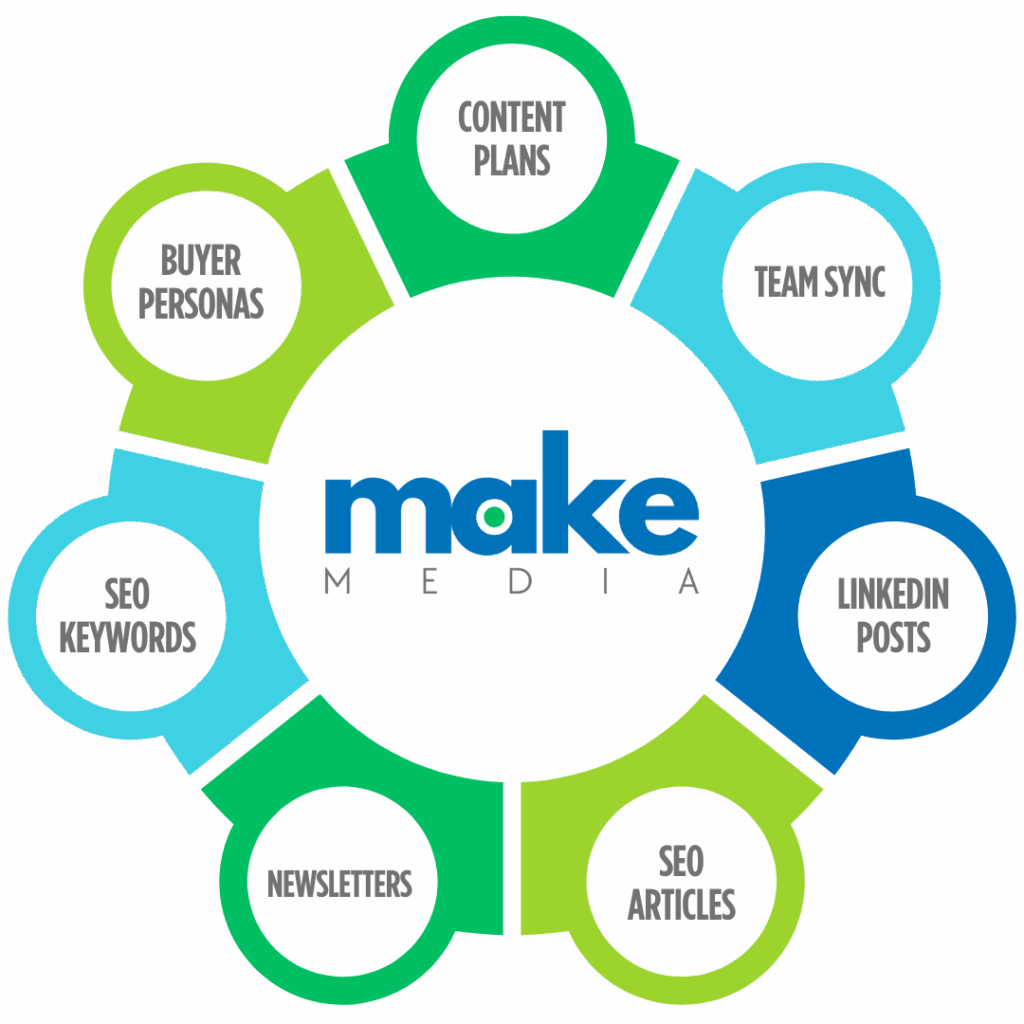
Give them a system that works with their schedule and communication style, and you’ll be amazed at the authentic, powerful content they can create. Try MakeMEDIA, which is designed to streamline your entire CEO content creation process: ideation, brand voice, and endless content ideas and drafts simply by talking.
