

Most B2B SaaS content never gets ready by executives. You might spend weeks crafting detailed product specifications or technical documentation, only to have C-suite decision makers scroll past or delete your carefully constructed materials.
The reason? Your content likely focuses on features rather than the strategic insights executives need to make decisions.
Let’s fix that.
Table of Contents
Tapping Into the Executive Mindset
C-suite leaders care about company-wide impact and measurable results. They need content that helps them benchmark performance, understand industry trends, and make informed decisions about resource allocation. Technical specifications and feature lists rarely address these priorities.
Think about this example from a CEO who receives two different pieces of content:
Document A:
- 15-page technical specification
- Detailed feature descriptions
- Technical architecture diagrams
- Implementation requirements
Document B:
- Three-page executive summary
- 25% reduction in project delivery times
- $2M annual cost savings
- Peer company examples
The choice of what they will likely read becomes obvious once you understand executive priorities (Document B).
Creating B2B SaaS Content That Resonates
Strategic Focus
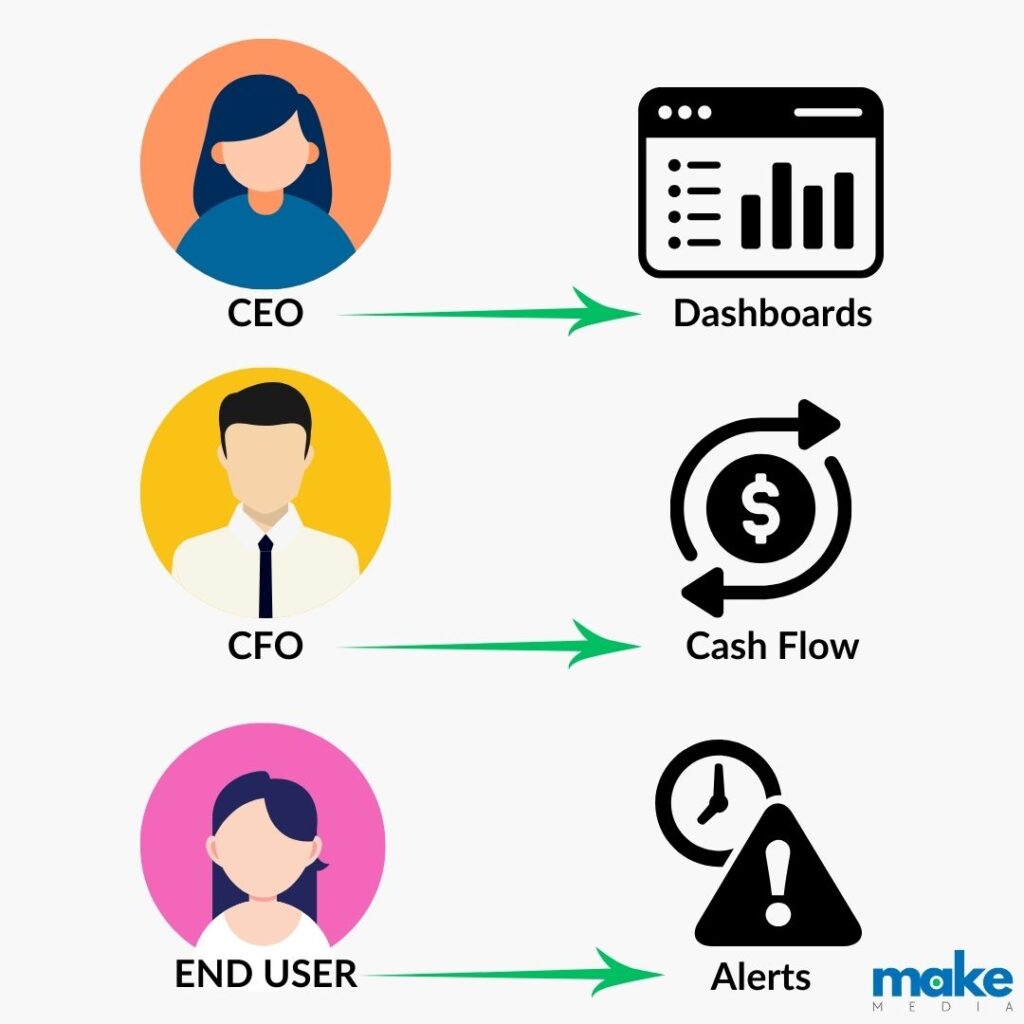
Your C-suite SaaS content strategy must connect directly to business outcomes. Instead of explaining how your dashboard works, show executives how it helps them achieve specific goals like increased revenue, reduced churn, or improved operational efficiency.
For example, if you’re targeting mid-sized banks, create content that demonstrates how other banking executives solved similar challenges.
Share specific metrics. For example: “Regional bank reduces customer response time by 25% using predictive analytics.” This approach immediately signals relevance to your executive reader.
Numbers matter. Executives respond to concrete metrics and peer experiences. Your content should incorporate specific performance improvements, industry benchmarks, real customer examples, and third-party research from respected sources like Gartner or Forrester.
The Metrics Report Strategy
Here’s a proven B2B SaaS content approach that generated leads from major enterprises like Toyota and DuPont: Create comprehensive benchmark reports using your aggregate customer data.
At MailerMailer (acquired by Nasdaq:ZD), we analyzed billions of emails flowing through our platform to produce detailed reports on average open rates, click-through rates, optimal sending times, and industry-specific performance metrics. This data, packaged in an attractive, professional format, became our most effective lead-generation tool. Executives valued these insights because they provided clear benchmarks for evaluating their own performance.
The process of creating a metrics report involves several key steps:
- Identify your data opportunities: Look for areas where you have significant aggregate data that could provide industry insights. Focus on metrics that align with executive priorities like revenue growth, cost reduction, and efficiency.
- Clean and analyze the data: Use data processing tools to ensure data quality and consistency. Apply statistical analysis to identify trends, benchmarks, and outliers. Consider segmenting data by industry, company size, or other relevant factors.
- Determine the most valuable metrics: While your data may offer many potential insights, focus on the metrics that will be most compelling to your target executives. In our case, open rates, click-through rates, and timing trends proved most valuable.
- Package the data effectively: Present your findings in a visually appealing, easy-to-digest format. Use clear charts, graphs, and infographics to highlight key takeaways. Provide brief explanations of methodology and data sources to build credibility.
- Promote and distribute strategically: Share your report through channels that reach your target executives, such as industry publications, executive newsletters, and LinkedIn. Encourage your sales and marketing teams to use the report as a valuable resource in their outreach efforts.
You likely have similar data opportunities within your SaaS platform. Modern AI tools can help identify patterns and trends in your data, creating compelling content that executives actually want to read. Upload a spreadsheet to ChatGPT or other tool and ask it to find trends or analyze your file. You can use a prompt like this:
AI PROMPT: "You are a market analyst that is looking to spot trends in data. Examine the data in this spreadsheet and identify correlations, trends and other insights that would be useful to a CEO of a mid-size manufacturing company."
Optimal Structure
Executive-friendly content follows a layered approach:
Top Layer (Executive Summary):
- Key findings and business impact
- Strategic recommendations
- Core metrics and benchmarks
- Peer comparisons
Middle Layer (Supporting Evidence):
- Charts and graphs
- Case studies
- Third-party validation
- Industry trends
Bottom Layer (Technical Details):
- Implementation specifics
- Technical specifications
- Methodology
- Resource requirements
Use colored callout boxes and sidebars to highlight key points. This allows executives to quickly scan for relevant information while providing depth for detailed review if needed.
B2B SaaS Content Distribution
Multi-Channel Distribution
Your B2B SaaS content strategy should meet executives wherever they consume information. Here’s how to adapt your core content for different platforms:
LinkedIn Posts:
- Lead with compelling statistics
- Focus on single key insights
- Include peer success stories
- End with clear calls to action
- Optimize hashtags for discoverability
- Tag relevant companies and influencers
- Respond to comments to boost engagement
Executive Newsletters:
- Summarize key findings
- Highlight industry trends
- Provide actionable takeaways
- Link to detailed resources
- Segment lists by role and industry
- Personalize subject lines and content
- A/B test delivery times and formats
Video Content:

- Keep under 3 minutes
- Focus on key metrics
- Include customer testimonials
- Emphasize business outcomes
- Optimize for mobile viewing
- Add captions for silent viewing
- Include clear calls-to-action
Livestreams, Webinars and Events:
- Provide exclusive data and insights
- Feature industry expert speakers
- Offer interactive Q&A sessions
- Follow up with personalized content
- Repurpose content for ongoing value
The key is maintaining consistency across channels while adapting the format and depth appropriately for each platform. Develop a content calendar to ensure regular, coordinated distribution and monitor engagement metrics to optimize performance over time.
Content Implementation Guide
Implementing an executive-focused B2B SaaS content strategy requires careful planning and execution. Here’s a step-by-step guide to get started:

- Conduct a content audit: Review your existing content through an executive lens. Identify gaps and opportunities for improvement. Look for areas where you can showcase unique data or insights.
- Define your target audience: Develop detailed personas for the specific executive roles you’re targeting. Understand their key priorities, challenges, and content preferences. Align your content strategy with their needs and goals.
- Identify your unique data advantages: Look for areas where you have proprietary data or unique customer insights. Consider how you can turn this data into compelling stories and valuable benchmarks for your target executives.
- Develop content templates and guidelines: Create standardized formats for your executive-focused content, including reports, case studies, and thought leadership pieces. Establish guidelines for tone, style, and visual branding to ensure consistency.
- Allocate resources and assign roles: Determine the budget, personnel, and tools required to execute your content strategy. Assign clear roles and responsibilities for content creation, distribution, and performance tracking.
- Establish a content calendar: Plan your content development and distribution schedule in advance. Ensure a regular cadence of high-quality, executive-focused content across all relevant channels.
- Implement quality control processes: Establish clear review and approval processes to ensure all content meets your quality standards. Use checklists and templates to maintain consistency and accuracy.
- Measure and optimize performance: Track key performance indicators (KPIs) for your executive-focused content, such as engagement rates, lead generation, and revenue attribution. Use this data to continuously refine and improve your content strategy over time.
By following this structured approach, you can develop a sustainable, effective content strategy that resonates with your target executives and drives meaningful business results.
Data-Driven Stories in B2B SaaS Content
The most compelling executive content combines data with narrative. For example, our metrics report didn’t just present statistics about email marketing performance. It told a story about how businesses were adapting to changing customer behaviors, backed by concrete data from billions of real-world interactions.
See our guide: Business Storytelling Frameworks
Here are a few more examples of data-driven stories that can capture executive attention:
- A case study about a B2B SaaS company that used machine learning to predict customer churn, resulting in a 30% reduction in revenue loss and a 15% increase in customer lifetime value.
- An industry report that analyzes the adoption of cloud-based solutions across different sectors, highlighting the competitive advantages of early adopters and the risks of falling behind.
- A thought leadership piece that explores the impact of data privacy regulations on B2B marketing practices, backed by survey data from marketing executives and legal experts.
B2B SaaS Content Framework

To create effective data-driven stories, follow this framework:
- Start with a clear, compelling headline that communicates the key takeaway.
- Open with a brief anecdote or industry trend that establishes relevance and urgency.
- Present your key data points using clear, visual formats like charts and infographics.
- Provide context and analysis to help readers interpret the data and understand its implications.
- Use specific examples and case studies to illustrate how the data translates into real-world impact.
- Conclude with actionable recommendations and next steps for the reader.
Remember, the goal is not just to present data, but to use that data to tell a story that resonates with your target executives and compels them to take action.
B2B SaaS Content Quality Checklist
Before publishing, ensure your B2B SaaS content meets these executive requirements:
Business Focus:
- Addresses company-wide impact
- Includes specific ROI metrics
- Demonstrates peer success
- Offers clear next steps
Format and Structure:
- Scannable layout
- Clear visual hierarchy
- Executive summary first
- Supporting data readily available
Distribution Strategy:
- Multi-channel approach
- Consistent core message
- Platform-appropriate formats
- Regular cadence
Creating Content For Your Business
Start improving your executive-focused content strategy by auditing your current materials through an executive lens. Identify your unique data advantages and consider how you might package those insights into compelling reports. Develop a multi-channel distribution plan that maintains consistency while adapting to platform-specific requirements.
And tell stories. When an executive can see their situation described in your story, it creates a connection that can lead to a sale.
Remember: Executives don't avoid your content because they're too busy. They avoid it because it doesn't help them make decisions.
Focus on providing clear, data-driven insights that support strategic decision-making, and you’ll see engagement increase.
MakeMEDIA can help you transform your B2B SaaS content strategy. Try it free and start creating executive-focused content that drives results. We’ll help you develop a comprehensive approach that turns your insights into compelling content that captures C-suite attention and generates quality leads.
You’ll create amazing content just by talking through a guided interview.
