

A carefully structured MSP content marketing strategy builds meaningful connections with your target audience through industry-specific insights and solutions. Your managed service provider (MSP) business can become a trusted advisor by creating educational content that addresses unique challenges within different sectors – from healthcare compliance to manufacturing efficiency.
Using the targeted approach described in this guide will lead to higher engagement rates and qualified leads because it shows deep understanding of industry-specific pain points while providing clear solutions that resonate with decision-makers.
You’ll learn a proven method designed specifically for your MSP to help you stand out from competitors who rely on generic messaging, making your expertise clear to potential clients who need your specific solutions.
Table of Contents
1. Target Industry and MSP Content Alignment
To get more business, use high-quality content to showcase your expertise. This involves using educational content to discuss the problems your prospects are facing and ways to solve those problems. This includes content throughout the buyer journey stages, not just when they’re trying to make a decision, but also earlier on when they’re seeking answers to questions about best practices or compliance that you have the expertise to address.
If your website only lists the services or products you sell, you’re missing a significant opportunity. You can reach that audience through a detailed MSP content marketing strategy that demonstrates your expertise, not just talks about it.
Understanding Your Prospects’ Habits
The biggest misalignment MSPs have when creating their MSP content marketing strategy is understanding where prospects spend their time. This includes what they read, such as publications, blogs, newsletters, and what events they attend.
You may be going to MSP-related events, but that’s probably not where your prospects are. Each industry has its own trusted information sources.

Here are a few examples:
- Manufacturing companies often rely on trade journals for equipment updates and process improvements.
- Healthcare providers need constant updates on regulations and best practices related to healthcare, whether they’re running a hospital system or a multi-office doctor’s practice.
- Construction companies focus on safety standards and project management resources.
When you provide educational material about IT services, cybersecurity, penetration testing, data backup, and other services you offer as an MSP, and put them in the context of these different niches, you have a strong strategy to reach clients where they are in terms of their online searches or looking at LinkedIn for educational tips specific to their niche. By understanding these specific channels, you can place your content where these business owners are already looking for answers, helping you build credibility with each industry’s established networks.
Every business owner has a distinct way of learning and staying current. CEOs know that they need to stay on top of trends to avoid missing out on something they need to know. If you target small businesses and write content using the words “small business” on your website, people may not identify with your message because “small business” is such a generic term.
On the other hand, if your website strategy, LinkedIn posts, and participation in discussion threads on community forums for specific niche markets focus on individual niches and their problems, you have a much better chance of making that connection with your target audience.
Also check out this top ranked guide: CEOs Guide to Content Marketing
Expanding Your MSP Content Marketing Strategy
Other things you can do as part of your MSP content marketing strategy include providing hands-on workshops or offering free online courses. It could be as simple as making YouTube videos about a trending topic.
Let’s say there’s big news about a cybersecurity hack from a large company. You can talk about that hack and how it relates to healthcare providers and what they need to know. This way, you can connect something in the news to your business for a particular niche. This concept, called newsjacking, was first coined by David Meerman Scott. It’s a very good way to showcase your expertise and get more exposure because you’re using a trending news topic.
Consider how other niche markets consume information:
- Restaurant owners might learn through food service associations.
- IT companies often use online forums and tech communities to find out about developments.
- Real estate professionals typically combine licensing requirements with market analysis resources.
Understanding these learning preferences can help you format the content in ways that match how each industry consumes information.
Aligning Content Topics with Industry Needs

In terms of content topic mapping, this includes the way you connect the things that are top of mind for your target market with the services and products you provide.
A retail business, for instance, would want information about point-of-sale technology and inventory management. Meanwhile, a professional service firm, such as an accountant or a lawyer, might look for client relationship tools and billing solutions. Manufacturing companies, on the other hand, might seek out improvements for making their processes more efficient or supply chain solutions.
When you start to align the topics you discuss with the specific needs of the industries you’re pursuing, you create much more relevant content that becomes a valuable resource for the different sectors. It really sets you apart from your competition because most other MSPs are creating fairly generic, cookie-cutter content. By adding stories to your content, such as customer experiences, examples, and use cases, you will really stand out. These success stories are very important.
Examples:
- Legal firms will engage more when you produced content that talks about regulatory compliance.
- Healthcare providers respond well to content around patient care and using technology to make patient care more efficient.
- Construction companies would value content around safety and project management resources.
Use the key things your market is thinking about as a starting point to match the content you’re producing to the industry needs. That will result in higher engagement rates and more inbound leads from your content.
2. Strategic Business Content Distribution
When developing your content marketing strategy as an MSP, it’s important to consider the distribution channels for your content. Your audience, typically business owners or executives, requires clear and concise information. You need to identify where your audience spends their time online and offline.
Leveraging Trade Associations and Professional Networks
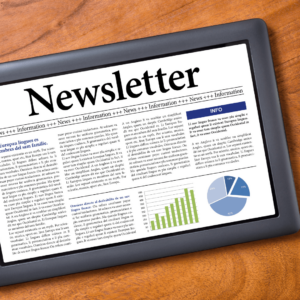
Trade associations and professional networks provide direct access to your target audience at conferences and industry events, making it essential to connect with people at these gatherings. These associations offer trusted information channels through their newsletters and other member communications, such as email blasts for specific topics. They may even provide webinars on how their audience can enhance their security.
Imagine delivering a webinar about cybersecurity threats. By doing so, you position your business as an expert and leader in the field. You demonstrate your expertise by sharing your knowledge and potentially offering a downloadable checklist to help attendees ensure their security. Reaching out to these associations should be a key component of your MSP content marketing strategy.
Exploring Other Channels
Many decision-makers also rely on various networks and platforms for insights and connections:
- Chamber of Commerce networks or other local communities and member associations
- Professional licensing bodies that maintain direct contact with qualified practitioners in regulated industries
- Industry-specific platforms like LinkedIn groups that create focused discussion spaces
Interestingly, Reddit and Discord have emerged as significant content marketing opportunities, with many people turning to these platforms to ask questions, learn, and find answers to specific issues they face.
Producing Targeted Content
MakeMEDIA can assist in producing content tailored to your specific audience. The platform helps you create outlines for specific audiences through buyer persona development and generates content ideas for your articles.
The guided interview process also provides relevant LinkedIn posts that you can share across your account and your team’s accounts to expand your reach. These channels are effective because they have already established credibility with your target audience.
Establishing a Strong LinkedIn Presence
If you’re selling to other businesses, a presence on LinkedIn is essential. You might be wondering what to post and how often. Aim to post on LinkedIn a couple of times a week, with the majority of your content focused on educating your audience rather than solely promoting your services or products.
Doing less than $2 million in annual revenue? Read our playbook for small MSPs:

Managed Service Provider Marketing for Ambitious B2B MSPs
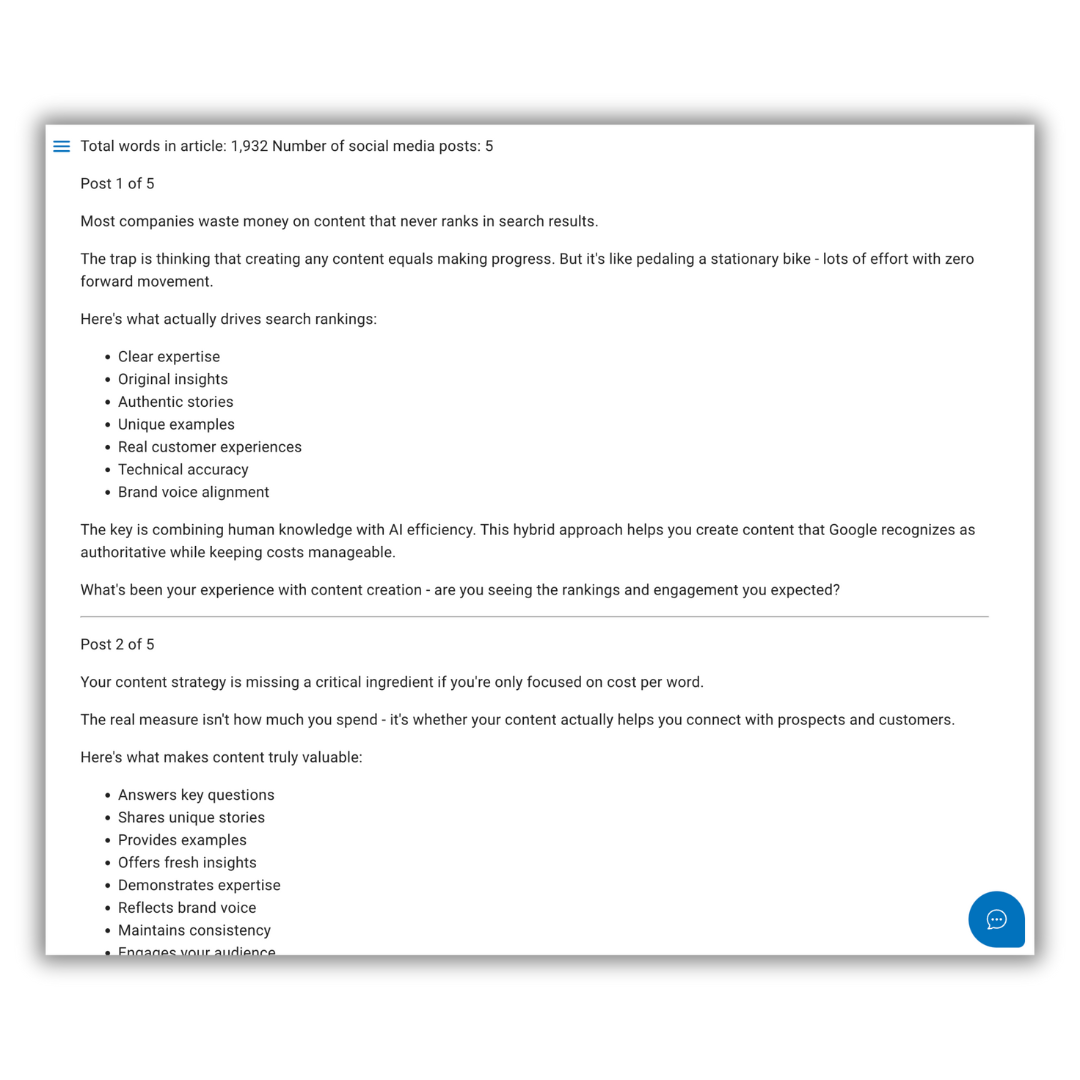
Think about this: customer success stories and educational tips should make up the bulk of your posts, with promotional content appearing every sixth or seventh post. Look for opportunities to contribute this type of content to establish yourself as an expert.
Formatting Content for Easy Consumption
When delivering your content, keep in mind that people often scan through content quickly, perhaps between meetings or while multitasking. Provide strong section headings that engage readers and format your responses, especially on LinkedIn, for quick comprehension.
Here are a few tips:
- Use bullet points
- Write short sentences
- Provide ample white space to make your content easily digestible
Poorly formatted content, even if it’s high-quality, can deter readers. Short videos, typically under a couple of minutes, can also effectively engage people when they’re browsing content.
Leveraging MSP Newsletters to Own Your Audience

Consider producing a newsletter to send to your audience. If you rely solely on platforms like LinkedIn to reach your prospects, you’re essentially renting the audience. Encouraging people to sign up for your newsletter through links in your LinkedIn posts and profile allows you to own the relationship and maintain contact even if the platform’s algorithms change.
Newsletters remain one of the most effective ways to reach people, offering an extremely high return on investment. Open rates typically peak before or after standard business hours, with executives often checking their inboxes early in the morning (around 7:30-7:45 AM) or after hours (4:30-6:00 PM, or even after 7:00 PM).
Avoid sending newsletters on Fridays, but consider Saturday mornings or Sunday evenings when executives may be preparing for the week ahead and catching up on their inboxes.
Formatting Newsletters for Readability
Ensure your newsletter formatting is easy to navigate, breaking down complex topics into digestible segments with clear headlines and bullet points for scanning, followed by more detailed text. Make Media’s guided interviews help create content in this manner, identifying topic shifts, creating section headings, and providing ample white space for improved readability.
3. MSP Content Ideas by Niche Market

To create a successful content marketing strategy for your MSP, avoid producing generic content like your competitors. Instead, create unique content for the different markets you pursue. Address the pain points for those industries and translate complex technical concepts into practical solutions that show real business value.
Healthcare Content
When producing healthcare content, guide an IT team or person at a healthcare provider through HIPAA compliance requirements and patient data security. Simply saying you provide cybersecurity is too generic and overused. They won’t fully understand how your expertise translates into what they need for HIPAA compliance.
Legal Team Content
For legal teams, focus on e-discovery and document management systems. When you start talking about data backup in the context of e-discovery tools, you have a more focused piece of content for the legal audience.
Financial Service Firm Content
Financial service firms want to know about fraud prevention and secure transaction processing. Rather than simply discussing penetration testing, translate that into how it helps reduce fraud and improve the security of processing transactions.
Manufacturing Team Content
Manufacturing teams want practical advice on automation and supply chain optimization. Provide step-by-step implementation guides tailored to their specific industry. This kind of content helps your company elevate its status.
Measuring Productivity Gains
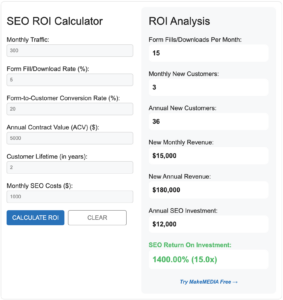
Your content should show teams how they can measure productivity gains from new technology adoption. Here’s an effective way to do this:
- Put a calculator on your website
- Include fields where people enter data like the number of employees, time spent on IT-related tasks, and security needs
- Use a calculation to show how much money they would save by using you as their managed service provider
You can use AI to create this calculator without writing any code yourself. That’s how I created this calculator (and then used MakeMEDIA to create content that elevated its SEO rank fast):
Providing Business Impact
Provide the business impact in your content. Here are some examples:
- Risk assessment checklists help companies identify and address potential vulnerabilities
- Growth planning guides assist companies in expanding to multiple office locations while keeping their technology in sync
These types of guides, calculators, and checklists provide executives with clear methods to track and understand the ROI of their technology investments.
Translating Technical Information
Translate technical information into plain English. Break down complex technical concepts using everyday business language. Check out these examples:
- Help banking professionals learn about blockchain through familiar transaction examples
- Show healthcare administrators how AI works through patient care scenarios
- Illustrate how IoT could be applied to production lines for manufacturing managers
When you translate technical concepts into business outcomes and practical implementations, you shine well above other MSPs producing content. It allows you to hone in on your market and create a successful content marketing strategy.
4. Content Marketing Client Journey

Your MSP content marketing strategy should align with your client journey. Your content is designed to help business leaders make smart technology choices by offering guides for industry solutions and helping companies understand what it means to implement the technological solutions that you can help them with. Share real stories that help your prospects understand the value that you provide over what a competitor might be providing.
Business Decision Support
Your content is there for business decision support. It helps leaders plan their technology investments step by step. Give them tools to:
- Map out project timelines and figure out what resources they’re going to need
- Plan their budgets and decide what to spend money on first
Imagine producing a guide on what to expect from a year’s budget for expanding your technology. You could provide examples of what you might recommend someone look at first. Think back to examples of existing customers where you did an audit and found that some of their systems were outdated. You wanted to get those upgraded first, then proceeded with additional cybersecurity protections. You even helped them get cyber insurance to make sure they were covered in case of an issue.
Creating support documents that cover these important business considerations can really make a big impact on your prospect’s comfort level when they engage with you. This kind of MSP content helps customers avoid surprises and stay on track with their tech projects.
Answering Key Business Questions
Think about how your guides will help answer questions like:
- What should we do first?
- What do we need to get everything implemented?
- What internal resources will we need?
- What will the MSP do? What will we do?
- How will we know we are successful?
The key is to answer those questions in a simple, plain English way. An FAQ section on your site is a great place to do this. People often look at FAQs, and when you put them on your website, Google cues in on them very quickly.
You might even find that some of your answers to FAQs end up in Google’s AI responses or “People also ask” sections.
Learn how to create an amazing Business Glossary →
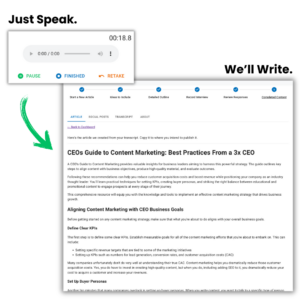
Creating an FAQ is a fantastic SEO technique and MakeMEDIA can help you produce it very quickly simply by answering questions verbally in a guided interview.
Helping Companies Adopt Technology
To put this in the perspective of a framework, your content helps companies figure out how to adopt technology and how you’re going to hold their hand all the way through the process so that they can sleep better at night.
- Show them what good technology readiness looks like.
- Help them check if their budget matches their goals.
- Guide them through questions about their growth plans and what support they’ll need.
When you write content and post this type of material on your website, you will find that your prospects that reach out to you through your website almost self-qualify. They will get a comfort level with your business because you provide a thorough analysis of all the things they are thinking about plus concepts they haven’t even thought about. They are grateful that you awaken them to these new concepts and ideas that they need to be considering. That helps build confidence in their decision to choose you.
Telling Real MSP Client Stories
You can’t say it enough: tell stories about real companies that have used your solutions. There are many ways to tell business stories. We even have an article on business storytelling frameworks that gives 10 techniques you can use to tell wonderful business stories. It includes several examples that you could translate into an example from your own experience, and it will really resonate with your audience.
These stories show practical results without revealing private details, because you can’t or don’t want to disclose your clients’ private information. The stories help people see the picture of what success could look like for them. That makes the benefits feel much more real and much more achievable.
5. Making Unique MSP Content Fast
Your MSP content marketing results improve through alignment with specific industry needs and buyer behaviors. Our team helps you create targeted campaigns that connect with decision-makers in your chosen sectors through tested methods and measurable outcomes.
Let us guide you through building content that speaks directly to your ideal MSP prospects, from strategy creation to content for every stage of the buyer journey. MakeMEDIA’s AI tools are custom-built for this task. Join the MSPs that are already gaining traction.
