

Managed service provider marketing is one of the hardest things to get right when you are running an MSP under $2 million in annual recurring revenue. You are technically strong. You know how to keep systems running, secure networks, and solve problems for your clients. But sitting down to write a blog post or figure out what to say on LinkedIn? That is a different skill set. And because of everything else pulling at your time, marketing often falls to the bottom of the list.
This guide is for U.S.-based MSPs selling B2B services to local and regional businesses. If you serve law firms, accounting practices, medical offices, manufacturing companies, or other professional services, this guide is written for you.
My goal is to show you how to build a realistic, repeatable MSP marketing system without hiring a full-time marketing team. The tactics in this guide come from working directly with MSPs and seeing what actually moves the needle.
Table of Contents
Why Managed Service Provider Marketing Is Hard Under $2M ARR

In an MSP generating under $2 million annually, the owner usually does most of the marketing. You might have a marketing person on staff, but that person may be stretched thin or may not have the technical knowledge to produce content that showcases your expertise. The result is a cycle of starting and stopping. You post a few times, get busy with client work, and the marketing falls off.
The other challenge is that getting found online requires a layer of expertise that many marketers do not have. You want your content to show up on Google and inside AI-generated answers. That means writing for specific audiences using the language they actually use when searching.
A medical practice owner searches differently than an accountant, even if they have similar IT concerns. The medical practice owner might search “how do I keep my patient records secure” while the accountant searches “how do I keep my accounting records for my clients secure.” Same underlying concern, completely different words. And those words determine whether you show up or not. It can make managed service provider marketing feel overwhelming.
This is persona-based marketing and it’s how you can show up inside AI answers. You need a focused MSP marketing strategy instead of random acts of marketing. You cannot afford to waste time on tactics that do not move your business forward.
You'll also like our other guide specifically for MSPs:

High-Impact MSP Content Marketing for Visionary CEOs
The B2B MSP Buyer Journey
One of my MSP clients used to say that no customer comes to an MSP because they have never used one before. What you are really doing is taking a customer away from another MSP that did not perform as well. Maybe the previous MSP was too generalist, or they could not provide the level of support the client needed, or the client simply outgrew them.
This changes how you should think about your managed service provider marketing strategy. Your potential clients are not starting from zero. They already know what an MSP does. They are evaluating whether you are a better fit than their current provider.
Understanding the buyer journey helps you create content that meets them where they are.
| Journey Stage | Buyer Mindset | Content to Create | Examples |
| Awareness | “I have a problem with my IT” | Educational content about common pain points | What cybersecurity threats should small accounting firms watch for? |
| Consideration | “How do I solve this problem?” | Guides and checklists that show solutions | How to evaluate your current MSP’s performance |
| Evaluation | “Which MSP should I choose?” | Comparison content, cost guides, case studies | What should managed IT services cost in [your city]? How to transition from one MSP to another without security risks |
The key insight here is to start with bottom-of-funnel content first. These are the articles that attract people who are actively looking to make a decision. Content like “What kind of support should you expect from your MSP” or “What does a cybersecurity audit include” sells before you have your first conversation with a prospect.
Once you have that foundation, you can work backward to create content for earlier stages. By the way, in a moment, I’ll show you a managed service provider marketing tactic that will reduce your time investment dramatically.
Positioning Your MSP to Stand Out
One of the things that holds back many MSPs from growing is taking clients from too many different industries. When you serve everyone, you become known as just another MSP, not an MSP with specific expertise.
Choosing a Niche and Geography

Think about getting your kitchen remodeled. One contractor says they do kitchens, bathrooms, basements, decks, and patios. The other contractor says they only do kitchens – and nothing else. Who would you trust more for your kitchen project? Most people would choose the kitchen specialist because they expect that company to have deeper knowledge, better designs, and more relevant experience.
Your MSP should work the same way. When a manufacturing company visits a website and sees content that specifically addresses factory floor security, supply chain management, and multi-location network issues, they feel like that MSP understands their world. A managed service provider marketing strategy with a niche focus will be more effective.
So how do you choose a niche? Look at your existing client base for client clusters. If you already have a few law firms, a couple of medical practices, and some accounting firms, pick one to focus your marketing on. I am not saying get rid of clients outside that niche. I am saying use that focus area to develop your managed service provider marketing plan going forward so you can attract more clients like your best ones.
Crafting a Value Proposition That Works
Most MSP websites are small. Maybe ten pages with generic service descriptions that could belong to any competitor. If you took your logo off your website and put a competitor’s logo on it, would anyone notice the difference? If not, your content is too generic.
Here is what a weak approach looks like versus a strong one:
| Element | Weak Approach | Strong Approach |
| Service pages | One page listing all services with a few lines each | Dedicated page for each service with detailed descriptions |
| Outcomes | Lists tools and features | Explains business outcomes: fewer outages, simpler audits, reduced risk |
| Proof | No testimonials or examples | Customer stories, sample outcomes, step-by-step explanations |
| Specificity | Generic language that applies to any business | Industry-specific language matching how your target clients think and search |
For example, if you offer cybersecurity threat assessments, do not bury that in a page with help desk services and network cabling. Create a dedicated page explaining what the assessment includes, what the output looks like, and what the client can do with the results. That depth builds trust, even if visitors do not read every word.
Building a Practical MSP Marketing Strategy
Effective managed service provider marketing does not require a huge budget or a large team. When you have limited bandwidth, focus beats complexity.
I recommend that you start with three channels that work fluidly together:
- Website and SEO content. This is your home base. Every piece of content you create should live here first. When someone searches for solutions to their IT problems, your website should show up with helpful answers.
- LinkedIn. This platform takes you farther faster than almost anything else. Executives in your target market use LinkedIn regularly to stay on top of industry trends. When you post useful insights, not sales pitches, but actual observations about cybersecurity threats or IT best practices, they pay attention. They may not like or comment, but they read. And over time, they start to recognize you as someone worth talking to.
- Email newsletter. You own your email list. LinkedIn is rented space where the algorithm decides who sees your content. Your newsletter goes directly to people who chose to hear from you. Even if they do not read every issue, the regular touchpoint keeps you top of mind.
You do not need to be everywhere. You need to be consistent somewhere. Otherwise, your managed service provider marketing strategy will not drive results.
Your 12-Month MSP Marketing Plan
The biggest barrier to creating an MSP marketing plan is that the full scope looks overwhelming. A year’s worth of content for multiple audiences at different stages of their buying journey? That feels like a mountain.
The reality is that you can get started in one afternoon. Focus on bottom-of-funnel content first because that attracts buyers who are ready to make a decision.
- Write one article about what clients should expect from their MSP.
- Write another about how to transition MSPs without security risks.
These pieces work immediately.
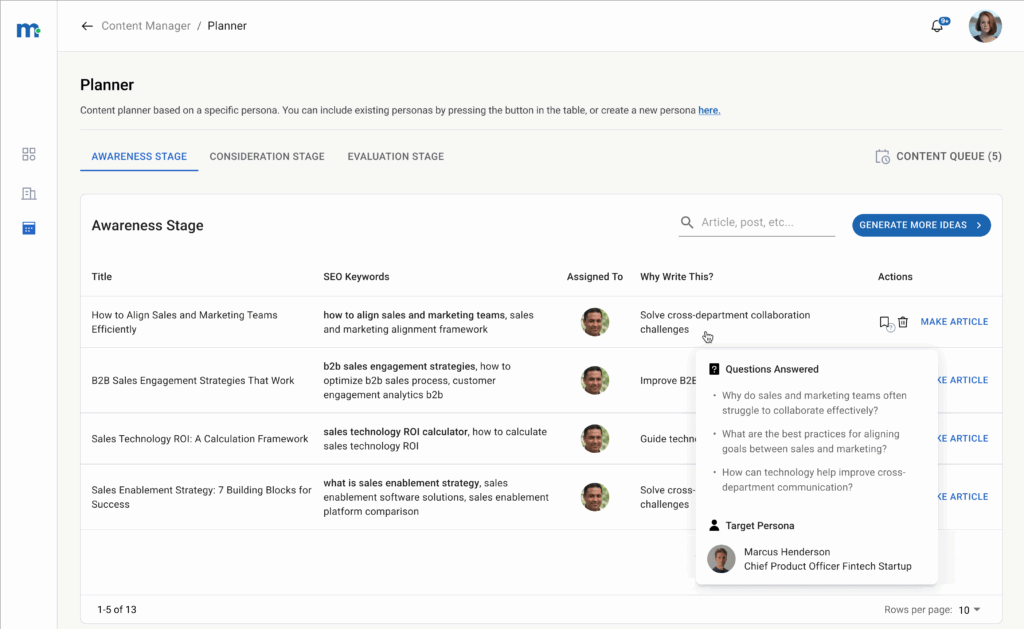
From there, build a sustainable cadence. With a tool like MakeMEDIA (screenshot above), you can build a customized managed service provider content marketing plan in about 15 minutes. Then, create high-quality articles in about 30 minutes a month instead of slogging for hours or paying expensive contractors who may not capture your full insights.
MakeMEDIA interviews you about your expertise, extracts the relevant points, and generates articles, LinkedIn posts, and newsletter drafts from that conversation. You can do this on your phone while taking a walk or as you wait before boarding a flight. It’s available when you are.
One of our clients used this approach to create an in-depth article about cybersecurity training for board of directors. She rose quickly in search rankings for that specific term because the content had depth and authenticity that generic articles lack.
Try MakeMEDIA free to build your personalized MSP marketing plan:
Managed Service Provider Content Marketing: Turning Expertise Into Leads
Think about McKinsey, the management consulting firm. People don’t visit their website only to learn about their services. They visit because McKinsey publishes thoughtful commentary on trending topics that executives care about. Your MSP can work the same way on a smaller scale.
Content That B2B Buyers Actually Read

When you write about the current cybersecurity threats to small accounting firms in the greater Los Angeles area, you create content that is specific enough to match what someone actually searches for. Compare that to having a few generic pages about “IT services” that look like everyone else’s site. The specific content gets found. The generic content gets ignored.
The key is creating content clusters around topics your buyers care about. One article is not enough. You need multiple pieces that address different angles:
- What kind of support should accountants expect from their MSP?
- How to make sure your systems are fully operational over the holidays
- What a managed service provider cybersecurity audit includes
- How to train your staff on security best practices
Each piece adds to your cluster, and clusters perform far better than isolated articles. This is where MSP content marketing becomes a real competitive advantage.
Creating Content for Different Stakeholders
One of the hardest things for technical people, and I say this as an engineer myself, is speaking in the language of your audience. When you talk to a CTO, you can use technical jargon because you speak the same language. But when you talk to a CFO, that conversation needs to change completely.

The CFO cares about return-on-investment (ROI), productivity gains, and reducing risk in business terms. They may not understand or care about the technical details. Your managed service provider content marketing needs to address both audiences. Technical content for IT leads, business outcome content for executives making budget decisions.
This means you may need separate content tracks for each stakeholder type. That sounds like a lot, but tools like MakeMEDIA can map out personas, identify their pain points, and create a content plan that addresses each one. You then go through quick interactive interviews to generate the actual content. (Side note: it’s how I wrote this article.)
Quick-Win Tactics for MSP Lead Generation
1. Local Search and Google Business Profile

Your managed service provider marketing efforts should include local search optimization. Every MSP serving a local geography should have a Google Business Profile. Google looks at the location of the person searching and compares it to where you are located. Your profile signals to Google that you serve a specific area.
Setting this up is straightforward. Search for your company on Google and claim your listing. Google will verify your address, usually by mailing a postcard with a code. Once verified, you can add your services, hours, phone number, and photos.
Here are quick wins for your MSP Google Business Profile:
- Add every service you offer as a separate listing
- Post links to your new content regularly (recency signals matter)
- Update your hours, especially around holidays
- Encourage reviews from clients, but stagger your requests over time so they appear natural
The review strategy deserves extra attention. Do not reach out to everyone at once because that creates a flurry of reviews followed by silence, which looks suspicious. Instead, ask one or two clients each week.
More on GBP optimization:

Google Business Profile Optimization Tips
2. Referrals and Partner Networks
Referrals remain one of the best lead sources for MSPs. The key is activating your network instead of waiting passively. Next time you talk to a client in your target niche, try this approach: instead of asking “do you know anyone who might need IT help,” ask “who do you know that might want to rethink their IT infrastructure?” That small change in phrasing often generates better responses.
You can also build partnerships with accountants, HR consultants, and other professionals who serve your target clients. These partners can refer business to you when their clients mention IT challenges.
Support your referral network with content. Create one-page PDFs, landing pages, and email templates that partners can share. Make it easy for them to send business your way.
3. Email and LinkedIn Nurture That Works
Your nurture strategy should match where prospects are in their journey. If someone downloads an early-stage guide about cybersecurity basics, do not immediately pitch them on a sales call. Instead, send a follow-up email offering your checklist or cost comparison guide, which are pieces further down the funnel.
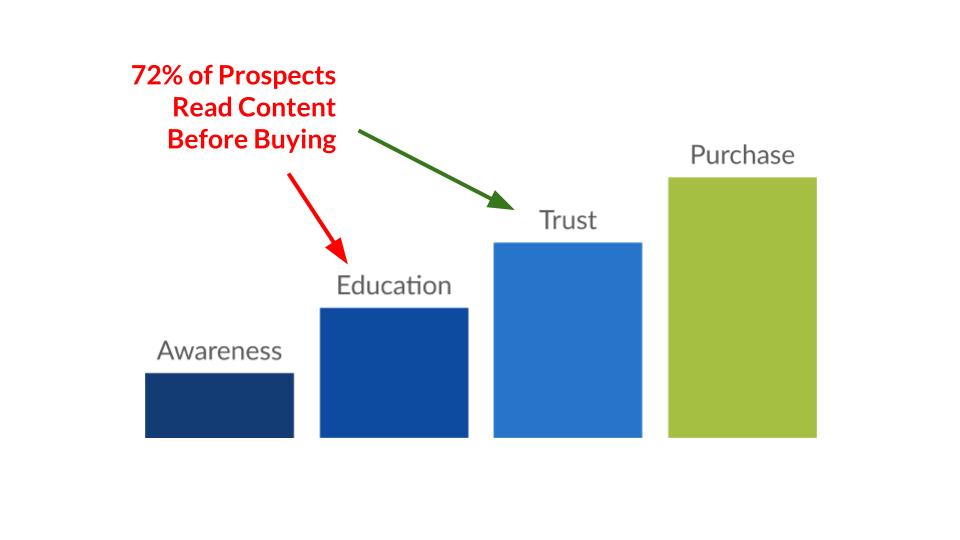
Track which content they engage with. If someone who downloaded an awareness-stage article clicks through to your pricing guide, they are probably closer to a decision than you thought. Email marketing tools track these clicks automatically.
There are also tools like RB2B, which cost around $100 per month, that can identify website visitors even when they do not fill out a form. This type of service is only available in the U.S. due to privacy laws, but it gives you visibility into who is reading your content.
On LinkedIn, focus on building relationships, not pitching. When someone follows you and they fit your ideal client profile, reach out with a simple thank you. Mention that you have a newsletter they might find useful. Jason Pfeiffer, the editor of Entrepreneur Magazine, does this consistently and says it works extremely well. The key is offering value, not asking for a meeting.
Tight on time? AI-Powered LinkedIn Content Strategy: Game-Changing Results
Measuring Your MSP Marketing
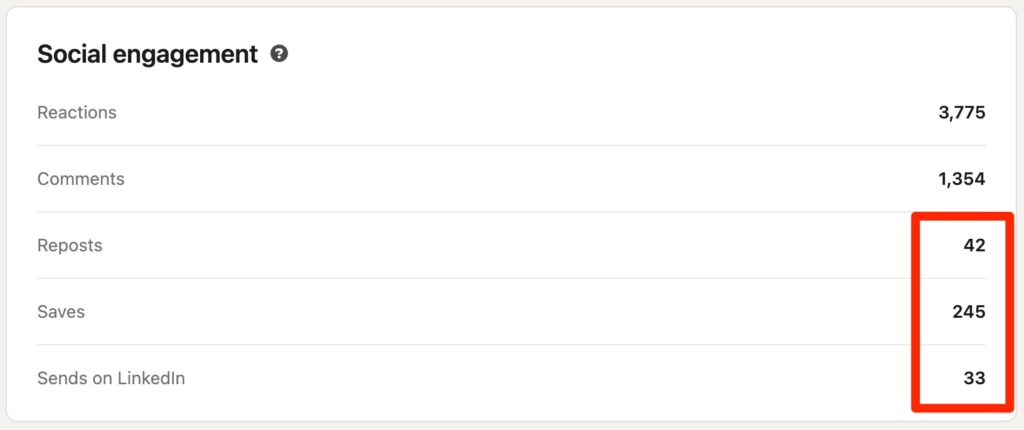
The big metric to watch is conversations. Likes are a vanity metrics, as are followers. What counts is actual conversations with potential clients.
Executives who could become your clients rarely comment or click like on LinkedIn posts. They read quietly. Over time, as they see you sharing useful insights, they start to recognize you. When they have a need, you are the person they think of.
Beyond conversations, track these metrics monthly:
- Inbound leads with quality buckets (needs nurturing vs. ready for follow-up)
- Email list growth as a leading indicator of future pipeline
- Pipeline generated from conversations that happened 1-2 months ago (account for sales cycle time)
- Conversations started through LinkedIn, email responses, and website inquiries
Here is a useful tactic: use content to stay in touch with prospects who just signed with a competitor. Send them your newsletter. Share useful articles. You are not selling; you are staying helpful. When their contract comes up for renewal, you are already in their mind.
Common MSP Marketing Mistakes
| Mistake | Why It Hurts | The Fix |
| Fits and starts | When prospects see your last blog post was from 2022, they question your responsiveness | Create content monthly using tools that make production fast; drip it out over time |
| Generic AI content | If you could put a competitor’s logo on your content and it would fit just as well, you have no differentiation | Build content from your own stories, examples, and expertise through interviews |
| Speaking technical language to business buyers | CFOs and business owners do not care about technical jargon; they care about business outcomes | Create separate content tracks for technical and executive audiences |
| Trying to serve everyone | Being a generalist makes you indistinguishable from other MSPs | Pick 1-3 verticals and build deep content clusters for each |
The consistency problem is the biggest one I see. You can solve it by batching your content creation. With MakeMEDIA, you can do one monthly interview that generates eight to ten LinkedIn posts. Schedule those to go out once or twice a week, and you maintain a consistent presence without daily effort.
Remember, marketing is not the same as sales. Everything in this guide is designed to bring in deal flow, warm up conversations, and create brand awareness. That creates fertile ground where sales happen faster because prospects already trust you.
Your MSP Marketing Playbook With MakeMEDIA
Managed service provider marketing becomes manageable when you have a system. If you are a U.S.-based B2B MSP generating under $2 million annually, here is your playbook:
- Position clearly. Pick a niche, speak your audience’s language, and differentiate your service pages.
- Create content that sells. Start with bottom-of-funnel content, then build clusters around the topics your buyers care about.
- Focus on three channels. Website, LinkedIn, and email newsletter. Be consistent rather than scattered.
- Generate leads strategically. Optimize your Google Business Profile, activate your referral network, and nurture leads based on where they are in their journey.
- Measure what matters. Track conversations and pipeline, not vanity metrics.
If you follow this system for a few months, you will have a steady flow of inbound leads, a recognizable presence in your market, and content that works for you around the clock.

MakeMEDIA can help you build this system faster. Our tool creates a full content plan in about 15 minutes, identifies the topics you should write about for each persona and buyer journey stage, and then interviews you to generate authentic articles, LinkedIn posts, and newsletter drafts. You get the depth and expertise that makes you stand out without spending hours writing.
Record your first 10-minute interview and see how quickly you can turn your expertise into content that attracts clients.
