

A CEO LinkedIn strategy doesn’t start with pursuing vanity metrics or posting corporate announcements. Steven Freidkin, founder and CEO of Ntiva, grew his managed service provider company starting with a $75 check for a 2-hour project in middle school, to $18 million from organic growth, and now to a Top 5 MSP with 800 employees. His approach to content proves that authenticity beats polish every time.
When I sat down with Steven to discuss how he built one of the Top 5 MSPs in the country, I expected to hear about sophisticated marketing funnels and enterprise sales tactics. He implements those techniques for sure, plus an acquisition strategy fueled by private equity. But he shared something far more valuable that every executive can apply to their world: how spending just two hours per month on LinkedIn is transforming both his business and his leadership.
The $75 Check That Started Everything
Steven Freidkin was in middle school when he started skipping classes. Not to get into trouble, but to spend time at the CompUSA across the street from his school. He found the store more interesting than his boring classes, and girls weren’t paying attention to him anyway.
One particular day, he happened to wear a red shirt. A customer mistook him for an employee and asked for help. Steven helped the man select and set up a computer in his home office. He took the bus from his parents’ house, worked for two hours, and received a check for $75 for doing something he loved.
The experience felt mind-blowing. But what happened next changed his life’s trajectory.
By the time Steven arrived back at his parents’ house, their tape-based answering machine already had two messages. Both were referrals from that first customer for residential computer support. That customer turned out to be the CEO of a 15,000-employee company, and the referrals came from other business owners in the DC metro area.
From Residential Support to Business Clients
For the next five years, most of Steven’s business remained residential computer support. But he was doing it for individuals who were business owners and decision makers in those businesses.
The school’s dean eventually caught Steven skipping classes. But instead of punishment, the dean made a deal: bring your grades up to As and Bs, and we’ll turn the other cheek. Steven accepted the challenge, accomplished that goal, and from that day forward, getting classwork done became a means to an end. It supported him doing what he was passionate about.
This pattern of growth through genuine relationships continued for nearly two decades. Steven grew Ntiva to $18 million in revenue without a single salesperson or marketing employee. Everything came through word of mouth and referrals. This organic foundation would later shape his entire approach to a CEO LinkedIn strategy built on authenticity rather than promotion.
The Turning Point at $18 Million
By 2015, Steven faced a choice that many founders encounter. The company had grown to about 80 team members, and he could no longer keep his finger on the pulse of every client interaction and employee experience.
He considered two paths: shrink the company to 40 team members and support law firms in a three-block radius of K Street in Washington DC, or scale with outside support.
To make this decision, Steven spent several days examining what motivated him to work seven days a week, 16 hours a day. He identified two recurring experiences that filled his energy tank.
What Actually Energized Him
The first happened at networking events. Steven would wear a name tag that said “Steve, Ntiva.” He’d meet a client at the bar, introduce himself, and hear responses like: “Ever since we started working with Ntiva, our technology has just worked so we could focus on growing our business.”

Those words would carry him through the next two weeks.
The second source of energy came from one-on-one meetings with new team members. Between three and six months after starting, Steven met every new hire for coffee or lunch. About 90% of the time, they opened the conversation the same way: “In the 90 to 180 days I’ve been here, I’ve learned and grown more than I have in my prior job and formal education.”
When Steven heard that, it was like attaching himself to a gas pump. He had enough energy to go another two weeks.
These experiences revealed something important. Steven had built a company that grew people, with technology simply accelerating that growth. This became the foundation for every decision that followed, including his later approach to content and communication. Understanding what drives you as a leader becomes the cornerstone of an authentic CEO LinkedIn strategy.
Building a CEO LinkedIn Strategy From Resistance
If growing people was the mission, then shrinking wasn’t an option. Growth would create more impact. Steven sought private equity support and chose a partner who could help scale while preserving the company’s values.
Six years ago, Holly Dowden joined Ntiva as the company’s first real marketing leader. She started pushing Steven to post on LinkedIn right away.
His response? “Holly, I got too much stuff going on. I don’t want to put time or energy into this.”
She persisted. She needed him to write stories, share his thoughts, and build his presence on social media. For months, she had to sit beside him and hold him accountable to create anything. It just wasn’t high on his priority list.
When Impact Replaced Obligation

Then something changed about a year into the process. Creating content became cathartic. Writing about technology, leadership, and human connection gave Steven an outlet to process his thoughts and share experiences that might help others.
The shift happened when he started receiving notes and feedback from people who connected with his stories. They told him how his posts improved their own growth journey or personal situation.
The fulfillment came from impact, not ego. People related to his experiences in ways they hadn’t heard before. This aligned with Ntiva’s mission of growing people.
“It became kind of a journaling outlet for me to share what’s on my mind,” Steven told me. This approach to a LinkedIn content strategy for CEOs differs from traditional executive communication because it starts with genuine human connection rather than corporate messaging.
The Two-Hour a Month Method
Most executives avoid creating content because they think it requires hours every day. Steven’s CEO LinkedIn strategy proves otherwise.
Once per month, he sits down with Holly or another colleague for a two-hour session. During that time, they discuss ideas he’s jotted down throughout the month, talk through whether they make sense, and draft content.
Those two hours produce six to eight weeks of posts that get scheduled in advance. Right now, Steven has content written and scheduled through October.
This batching approach removes the pressure of daily content creation. It allows for strategic thinking about themes and messages rather than scrambling for something to post. For busy executives implementing a LinkedIn content strategy for CEOs, this efficiency makes the difference between consistent presence and abandoning the effort.
See MakeMEDIA's Guide:

AI-Powered LinkedIn Content Strategy: Game-Changing Results
The Coffee Shop Lesson on Courage
The scheduled content forms a foundation, but Steven remains flexible for moments that demand immediate sharing.
One weekend morning, Steven took his twins to a coffee shop. A soldier in uniform stood in line ahead of them. Steven and his kids bought the soldier coffee and thanked him for his bravery.
The soldier turned around, grateful for the gesture, but offered a correction that stopped Steven in his tracks. “Courage is different from bravery,” the soldier said. “Bravery just happens regardless of the consequence. Courage requires you to think first, know the risks, and then take that step anyway.”
That lesson stuck with Steven. When he got home and tried explaining it to his twins, he realized others might benefit from this soldier's wisdom.

He drafted a post right away and shared it.
These spontaneous moments happen often. The key is having both the discipline of scheduled content and the flexibility to share timely experiences. This balance defines an effective CEO LinkedIn strategy that feels both consistent and authentic.
Getting Engagement in Your LinkedIn Content Strategy for CEOs
Steven has learned through years of posting what resonates most with his audience. Personal stories with or without images tend to generate the most engagement.
But he doesn’t force those stories. When they’re real and he can share them, he does. When they’re not, he doesn’t try to manufacture them. He also focuses on education about technology trends and how businesses can use them to become more efficient and successful.
What Steven almost never does is share Ntiva’s corporate announcements repeatedly. He’ll share big news on occasion, but he’s not acting as a repeat channel for what the marketing team already puts out.
“If there is an audience interested in what Ntiva is putting out, they’re already getting that,” Steven explained. “Short of an occasional share of big news or something exciting, I don’t feel that me repeating that is adding tremendous value.”
The LinkedIn Content Mix That Works
Steven’s approach to a LinkedIn content strategy for CEOs spans several categories that work together:
| Content Type | Purpose | Frequency |
| Personal stories | Build human connection and relatability | When authentic moments occur |
| Leadership lessons | Share experiences that help others grow | 2-3 times monthly |
| Technology education | Establish authority and provide value | 2-3 times monthly |
| Company milestones | Celebrate team achievements | Occasionally |
| Industry trends | Position as thought leader | 1-2 times monthly |
This mix keeps the feed interesting while serving different audience needs. Some people connect with the personal stories. Others come for the business and technology insights. The variety ensures sustained engagement across different reader preferences.
People follow executives for their personal insights and perspectives, not for another distribution channel of press releases. Understanding this distinction shapes every piece of content Steven creates and should inform your own CEO LinkedIn strategy.
The Metrics That Actually Matter
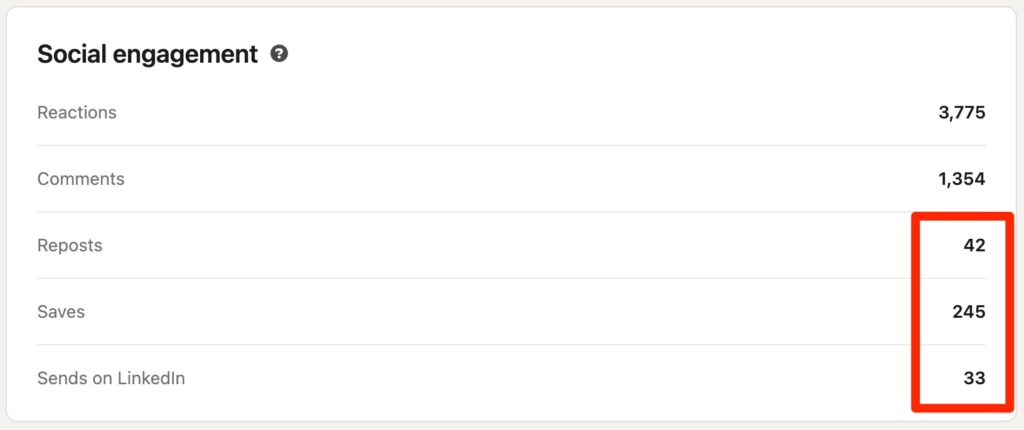
When I asked Steven about metrics, he separated his personal content from the company’s broader marketing efforts.
For company content, the marketing team tracks marketing qualified leads (MQLs) and sales qualified leads (SQLs). They use tools like HubSpot and Six Sense to track the buyer journey, seeing when prospects look at content, how they come back, and what specific pieces interest them.
In the last quarter alone, marketing qualified leads increased threefold. That translated to more than $100,000 in monthly recurring revenue from deals that closed through marketing efforts with no prior relationship to those companies.
This took years of consistent work to achieve. Steven emphasized that what works today might not work tomorrow, especially as more people use AI for search instead of traditional web browsing.
The Hidden Metrics of Impact
For his personal content, Steven tracks something less tangible but equally important. He pays attention to the direct messages and private responses, which he says run 10 to 15 times more than public comments.
These private conversations reveal the real impact. People share how his stories made them feel less alone, gave them permission to be more vulnerable as leaders, or provided the exact insight they needed at the right moment.
One post that generated massive private response came from a simple vulnerability. Steven wrote about being a hugger and hesitating when meeting a colleague because they hadn’t established that human-to-human connection yet.
After they talked about it and realized they were both huggers, everything felt right. But that initial hesitation and the conversation it required resonated with readers. Direct messages poured in from people sharing similar experiences, admitting they didn’t know how to ask about physical greetings, or expressing relief that someone else felt the same uncertainty.
This demonstrates how a CEO LinkedIn strategy succeeds not just through visible metrics such as likes and comments, but through the deeper connections that happen in private conversations.
Sharing Your Playbook Benefits Everyone
One of the most contrarian aspects of Steven’s approach is his willingness to share Ntiva’s playbook openly, even if it helps competitors.

When creating thought leadership content, he doesn’t hold back competitive secrets. If Ntiva has learned how to help clients use data lakes with AI to identify trends and opportunities, he shares that approach.
This philosophy stems from Ntiva’s core mission. If the company exists to grow people using technology as the accelerator, then sharing knowledge serves clients, team members, and even competitors.
Living Values Through Content
Steven has become comfortable with this approach. Living company values publicly, communicating them externally, and accepting both the benefits and challenges that come with transparency has become part of Ntiva’s identity.
“Some of the thought leadership we share takes away or could take away our competitive advantage,” Steven acknowledged. “We’re willing to take that risk. A rising tide lifts all boats.”
I’ve seen this same pattern throughout my career. The more openly you share how you do something, the more people see you as the expert. Often, they’ll try to follow your playbook, stumble, and come back to hire you anyway.
This openness enhances any CEO LinkedIn strategy by building trust with audiences who can tell the difference between genuine knowledge sharing and self-promotion disguised as education. When you’re willing to give away your best ideas, people trust you have even better ones in reserve.
How Content Shapes Company Culture and Talent
Beyond lead generation and brand building, Steven’s LinkedIn presence affects something harder to measure but equally important: company culture and talent attraction.
New team members, especially those joining through acquisitions, can preview the company culture through what Steven and other leaders share online. This helps people self-select for cultural alignment before they ever apply or accept an offer.
Steven also looks at what prospective team members and acquisition targets post online. He’s not trying to catch anyone in something problematic. He’s simply trying to understand if there’s a good fit.
Leaders from companies Ntiva has acquired start creating their own authentic content after seeing Steven’s example. They develop the habit of sharing their unique perspectives and stories, creating a ripple effect throughout the organization.
The Cultural Advantage of Transparency

This two-way transparency creates what Steven calls “incredible alignment” where people can see whether cultural fit exists before making major career or business decisions.
A well-executed CEO LinkedIn strategy doesn’t just attract customers. It attracts the right team members and even the right acquisition targets who share values and vision. This makes the hiring process more efficient and increases retention because people know what they’re getting into from the start.
The visibility also helps current team members feel proud of where they work. When they see their CEO sharing authentic stories and insights, it reinforces the culture they experience daily.
While Ntiva enables technology, Steven’s LinkedIn content often attempts to restore human connection in a world that increasingly lacks it. This tension makes his content more interesting and authentic than typical technology executive posts. He’s wrestling with real tradeoffs and inviting his audience into that conversation.
Getting Started With Your Own CEO LinkedIn Strategy
For executives wondering where to begin with developing their own CEO LinkedIn strategy, Steven offers straightforward advice:
- Start by thinking through what in your day has been meaningful and write those moments down
- Pick one platform to start with (LinkedIn remains one of the strongest for B2B executives)
- Identify the common themes that emerge from your daily experiences
- Connect what’s important to you personally with what your company focuses on
- Schedule two hours monthly to batch-create content with a trusted colleague
- Stay flexible for spontaneous moments that deserve immediate sharing
- Track both public and private responses to understand real impact
When you align who you are as a person with who you are as a leader and what your business does, everything becomes easier. You stop fighting yourself to maintain different facades or keep up different narratives.
The Power of Authentic Leadership
“If you make that what’s important to you, you’re gonna lead with more passion and more clarity, and you’re gonna attract people around you that have incredible alignment,” Steven explained. “They get to row in the same direction with you.”
This alignment might take time to achieve, especially if it differs from how you’ve been presenting yourself and your company. But getting clear with yourself and making that clear to others is powerful.
Looking ahead, Steven sees executive visibility and thought leadership becoming more important, not less. With so much change happening in business and technology, people need guidance through ambiguity. A friend of his offers a framework that resonates: ambiguity leads to anxiety, and the only antidote is clarity.
Start With 15 Minutes This Month
If you’re an executive who has been putting off creating content, take one practical step this week. Schedule a short block on your calendar. Invite a marketing colleague or trusted advisor to join you.
Before that meeting, jot down moments from your days that felt meaningful. Note the questions clients and team members keep asking. Record the lessons you’ve learned that you wish you’d known earlier.
Next, draft (or ask your colleague to draft) six to eight short posts. Schedule them out over the next few weeks. You don’t need to post daily. You don’t need perfect prose. You need authentic insights that help someone else on their journey.
If you don't have time to write the posts, use MakeMEDIA and you can do everything in 10 minutes... ideation, interactive interview, draft posts in your brand voice.

MakeMEDIA Video Tutorials →

Try it FREE →
Steven built a $175 million company and current invests just two hours monthly on content creation. The return on that investment goes far beyond marketing metrics. It shapes culture, attracts talent, builds trust with clients, and restores some of the human connection that technology has eroded.
What Makes a LinkedIn Content Strategy for CEOs Work
A LinkedIn content strategy for CEOs that works starts with who you are, what you care about, and what you’ve learned. Everything else is just scheduling and consistency.
Steven doesn’t claim to have answers to everything. In fact, he admits he doesn’t have answers to most things. But he can share his thoughts openly and vulnerably. He can commit to sharing what he knows as often as possible.
We’re living in an ambiguous time. Leaders have an opportunity to step up and guide people who need someone to show the way. This is where developing a CEO LinkedIn strategy becomes more than marketing. It becomes leadership. It becomes service. It becomes the very thing that drew Steven to building Ntiva in the first place: growing people.
Your story matters. Your insights help others. Your leadership extends beyond your organization to everyone who needs the clarity only you can provide based on your unique experiences.
