
A B2B content creation workflow that captures executive insights without creating scheduling bottlenecks can help your team publish content that ranks in both traditional search and AI-powered search results.
This article shows you how to build a system that turns executive interviews and existing recordings into clusters of persona-specific content, explains why 70% of buyers now use AI during their research process, and provides a method to create competitor comparison pages that most companies ignore but prospects actively search for.
Table of Contents
You’ll learn how to maintain an authentic voice across all content, repurpose webinars and calls into multiple formats, and understand why recency matters more than ever for AI citations that only last about a month on average. The methods outlined here give you a repeatable approach to scale your content production while preserving the expertise that makes your brand stand out.
The Foundation of a Strong B2B Content Creation Workflow
The biggest obstacle in getting a content creation workflow moving for a team that wants to involve executives is making it as easy as possible to capture the executive’s thoughts when they have time to share them.
If you ask an executive to sit down and discuss their thoughts on a specific topic without preparation, they won’t show the most optimal ideas — the ones that give you the material you need to truly stand out in a hyper-competitive content environment. And the last thing you want to do is rely on AI to generate those responses, because AI-generated content is easily detectable and will not amplify your brand.
What’s Actually Working in Content Creation Today
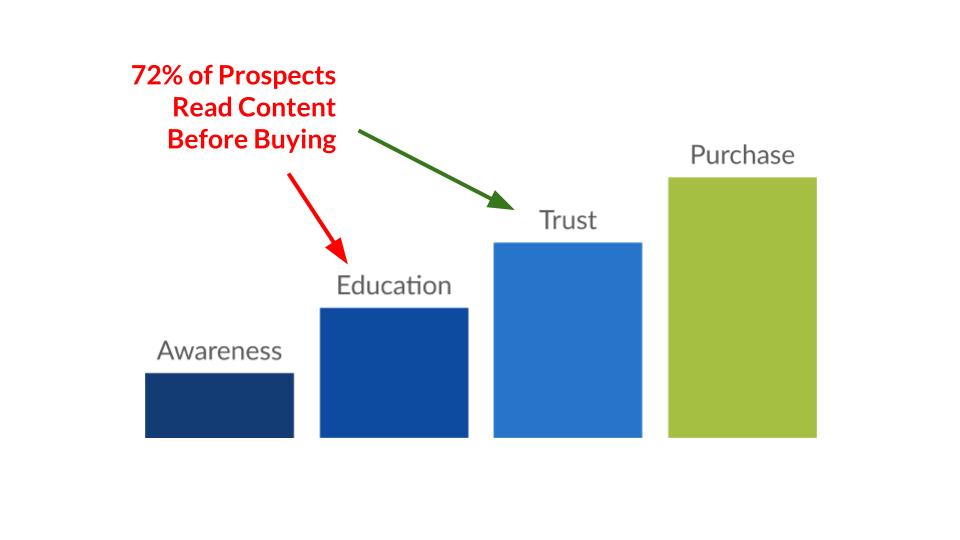
The content that performs well right now tends to fall into a few specific categories. You’ll see strong results from trend analysis, commentary on specific developments in your industry, and even explaining why your company is making the investments it is.
Another approach that works well is showing how your clients can make the best use of your products or services. It’s important not to explain it in a promotional way, but rather in an educational way that helps drive them toward a sale. This kind of substance forms the backbone of any effective content planning framework and gives your audience a reason to keep coming back.
Using AI the Right Way in Preparation
Most of us can spot AI-written copy a mile away. You should never take output from AI as copy-and-paste ready to publish. That said, AI can actually come in handy in your B2B content creation workflow if you focus on preparation and ease.
You can use AI to identify topics your clients would be interested in, like we offer with MakeMEDIA’s Content Planner. The next best move is to create an interview prep outline that researches what’s currently being talked about in your industry, where your company fits in, and what your executive can comment on.
Building a Great Interview Outline
The next step in your content creation workflow is preparing an interview that extracts an executive’s knowledge and insights. A very detailed interview package makes all the difference. MakeMEDIA, for example, can produce this very quickly for you, including doing all of the research that would normally take hours but condensed into about 10 minutes of very focused work.
Once you have that research in hand, you can prepare very insightful questions, almost like you’re a professional journalist on 60 Minutes. Start a question with an opening that provides context because it allows the executive you’re interviewing to address very specific topics that are relevant for your audience.
Sample Thought Leadership Interview Questions:

When you think about questions clients were asking 18 months ago, what are they asking today that they didn't ask then?

What kind of investments is the company making to address these new concerns?
Getting the Interview on the Calendar
Getting this interview scheduled is the first step in any content team scaling strategies effort, because executives oftentimes prefer speaking to people over writing things down.
If you’d like an alternative, though, MakeMEDIA also offers an option that allows the executive to hop onto their phone and do the interview anytime anywhere. The system captures their responses and asks appropriate follow-up questions to really extract all of that insight.
Aligning Content With Your Audience
The final step transforms that raw interview material into something your audience actually wants to consume. This means making sure the content aligns with a few important elements:
- Your target audience and the specific personas you’re going after with that piece of content
- The keywords that will help your content get discovered
- The page structure optimized for both traditional search and AI search
This structured approach removes the bottleneck of executive availability while still preserving the authentic voice and expertise that make your content stand out. It also gives your team a repeatable content planning framework that scales as your publishing needs grow.
Content Planning Framework for Consistent Output

Many people make the mistake of jumping straight from brainstorming ideas to writing content. The right approach requires significantly more planning, and the reason comes down to one concept: the cluster effect. A content planning framework built around clusters sends a strong signal to large language models that ingest your content for potential citing, as well as to traditional search engines.
These clusters around a specific thought or set of concepts enable search engines to determine whether your content deserves citations or rankings. Producing a single article on a specific topic is simply not enough.
Go Deep on Every Nuance
You need to go deep into every nuance for a particular persona. If you’re building a product and you have a page about all of your integrations, for example, the right move is to create one unique page for every single integration and provide examples and case studies inside that page. This approach enables very context-specific responses to get indexed, and those responses stand a much higher chance of showing up inside AI search results.
The urgency behind this approach is backed by data. Studies from Forrester and other reputable research firms indicate that 94% of buyers now use AI as part of their own research and decision process. If your content is not optimized to get cited inside AI answers, you are not even part of the invisible conversation happening every day among prospects who have not yet found or tuned into your brand.
Context-Specific Content Wins the Ranking Game

Think about a company that sells a CRM to small businesses. If you create an article about CRMs for small businesses, you might reach some people, even though that’s a very competitive term. But a small business could be a small law firm or an accounting firm, and those buyers are very unlikely to do research based on considering themselves a “small business.”
Here’s what their actual research might look like. They might type something along the lines of: “I run a 20-person accounting firm in the greater Chicago area, and we are looking to expand to a second location. How do I get the right CRM and configure it so that my team has access to all of our data, regardless of where they’re located, including whether they’re on site or working from home?”
You might think the answer is obvious: just create a CRM that’s in the cloud so everybody can access it. But these are legitimate questions that people who are not technical might be asking. If you provide the answer and your competitors have not created one, you turn up in AI citations while others don’t.
On top of that, because this piece of content is tightly tied into what accountants or lawyers would want, the firms doing this kind of research will find you far faster than a competitor who only thinks about their CRM in the context of the words “small business.” Context-specific posts are driving a significant portion of ranking results today.
Plan Clusters for Every Stage and Persona
As you plan out your B2B content creation workflow, you need to watch for opportunities to create clusters of content for every stage of the buyer journey and for every persona you pursue.

This kind of planning used to take me four to six weeks to get right, because you need to align what you sell with who you sell to and their reasons for buying from you all along their journey, from awareness to consideration to evaluation, including how you compare against competitors.
Effective content team scaling strategies depend on doing this foundational work upfront. It does take effort, but the good news is that with MakeMEDIA, you can complete all of that content planning in about 20 minutes, and it will give you an endless supply of article ideas to create clusters for every stage of the buyer journey and for every persona you pursue.
Don’t Shy Away from Competitor Comparisons
Adding a section that compares you head to head with your competition will also get you ranked very fast. I tested this and it works very well because most companies do not have these pages yet, but most prospects ask AI about them.
To illustrate, someone using AI might type in something like: “What are the advantages of using Peterson Law Firm over the Jefferson Law Firm? Both of them claim to specialize in tax law.”
You might feel it’s awkward to talk about a competitor on one of your pages. But if you don’t, you miss the opportunity to capture the audiences that are actually using your competitor’s name during their searches and AI interactions. This is how modern buyer research happens before prospects make a decision on who they pick as their vendor.
All of these components (persona-specific clusters, context-rich content, competitor comparisons, and journey-stage alignment) need to factor into your content marketing plan before you even start creating a single piece of content.
Content Team Scaling Strategies That Maintain Quality
Making sure your content sounds consistent is a significant challenge as you scale. Marketing and content teams are frequently tasked with creating content in an executive’s voice, and keeping that voice authentic across a growing volume of output requires intentional effort.
Capturing an Executive’s Voice
The first thing you can do, and this is something AI can help with and is a feature set built deeply into MakeMEDIA, is capture the nuances of an executive’s voice. Think about all the subtle elements that make someone’s communication style distinctive:
- Their preferred word choice and tone
- Their style of using examples or anecdotes
- How they cite research when they speak
All of these elements need to remain consistent across every piece of communication that is ghostwritten on behalf of an executive. Getting this right is foundational to any effective content planning framework, especially as more team members contribute to the content creation process.
Establishing a Consistent Company Voice

Beyond any single executive, you may also have a general tone and style for your company. MailChimp, the large email marketing firm, offers a great illustration of this. They always maintained a fun tone across all of their content. You could read it and instantly tell it came from someone with a sense of humor and a fun, engaging style of writing. They kept that consistent throughout all of their communications.
Contrast that with IBM. Their research reads a little more on the dry, professional side because that’s part of their brand. Capturing both the executive’s voice and the company voice matters tremendously, and it becomes even more important as your team grows.
How MakeMEDIA Streamlines the Process
A tool like MakeMEDIA can make this process significantly easier through its step-by-step approach. It handles three major parts of the content creation workflow for you.
- First, it creates interview prep, including deep research on current information so you can comment on trends and timely topics that can then be addressed during the interview.
- Second, it generates a content cluster of topic ideas so you can build depth around specific subjects your audience wants to hear about, rather than producing a one-off or two-off article idea that doesn’t create brand authority around a topic.
- Third, it helps you maintain that consistent voice across everything you produce.
Built for Teams, Not Just Individuals
MakeMEDIA is designed for teams, which makes it a natural fit for content team scaling strategies. An executive could create content on their own, or a team member could conduct the interview, upload the transcript, and MakeMEDIA will then proceed with the appropriate steps to create that first draft.
You can also share content among team members with access control, an important feature for content creation workflows. This stands in contrast to other content creation tools, which are really designed for one individual to use. Enterprises and companies with teams work very differently and need team access to support a smooth workflow. That’s one of the major benefits MakeMEDIA brings to the table.
Workflow Components That Prevent Production Bottlenecks
A well-designed B2B content creation workflow addresses two primary bottlenecks that slow down most teams.
- The first is figuring out exactly what you should be talking about, not just in a broad thematic sense, but at a granular level. You need to identify what a single persona needs to know at a specific stage of their buyer journey that ultimately leads them to you.
- The second bottleneck is getting time on an executive’s calendar to interview them about that topic.
Repurpose What You Already Have
Here’s the thing: executives are often already doing speaking engagements and may already be discussing topics highly relevant to your audience. Whether that takes the form of a podcast, a webinar, or a Zoom call designed to onboard and train internal teams, most companies already have a wealth of content that nobody repurposes once the mic turns off.
A strong content planning framework recognizes this existing material as a goldmine for your content creation workflow. To remove the bottleneck of constantly needing to create from scratch, you should repurpose what you have already built, content that still contains value your audience can use.
Turning a Single Webinar Into Multiple Assets
Say you recently hosted a webinar. Rather than letting it go by the wayside now that it’s finished, you should extract more value from it. Go into your Zoom account where the webinar was recorded, save the transcript, and then upload that transcript into a tool like MakeMEDIA. From there, you answer a few quick questions about the type of content you want to create.
The outputs you can generate from a single transcript include:
- LinkedIn posts
- Instructional or educational articles
- Story-driven pieces
- Content written from the perspective of a specific speaker, such as your executive
- A secondary article for a guest who appeared on your webinar, giving them something to post on their own channels
All of these selections produce authoritative first drafts that let you repurpose content already in your library. This is a massive time savings in your B2B content creation workflow.
Why Consistent Publishing Fuels AI Search Rankings

This approach represents one of the most untapped content team scaling strategies available. It expands your reach and ensures you maintain a consistent publishing cadence and that consistency matters because recency is a significant ranking factor for AI search.
Testing has shown that newer posts containing the same depth as an older, previously ranked post tend to earn higher citations. The average citation, in fact, lasts only about a month.
Read: AI Citation Optimization Guide
Continuous content deployment, especially using strategies like competitive analysis pages, gives you a much higher chance of being ranked consistently over time. That kind of deliberate content planning will take you far further than a haphazard approach to building out your content.
Deploying Content Creation Workflow Software
Getting your content creation workflow running requires the right combination of planning, tools, and processes that fit how your team actually works. MakeMEDIA helps B2B teams capture executive insights, plan content clusters that rank in AI search, and maintain a consistent publishing schedule without adding headcount.
If you’re ready to move past the bottlenecks that keep your team from publishing at the pace your business needs, reach out to see how we can help you build a system that scales with your growth.
